






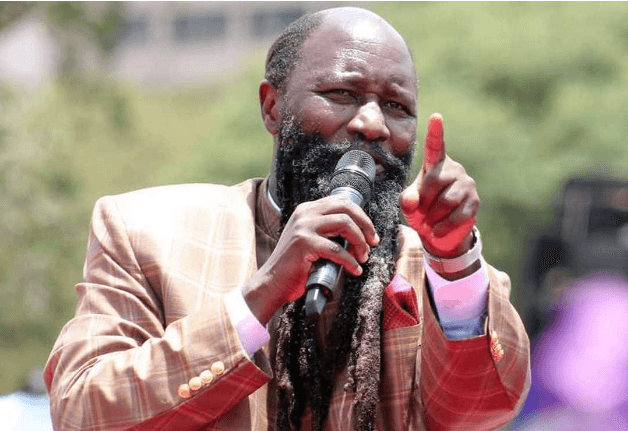
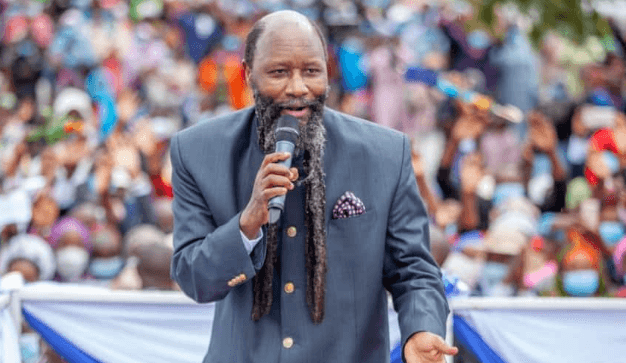
Few religious figures in Kenya evoke as much attention, devotion, and controversy as Prophet David Owuor. Revered by followers as a divinely appointed messenger and dismissed by critics as a self-styled prophet, Owuor’s name has become synonymous with massive crusades, dramatic prophecies, and unverified miracle claims not only in Kenya but across continents. From humble beginnings preaching on the streets of Nakuru in the early 2000s, Owuor has risen to command enormous crowds, wield significant influence, and cultivate a global religious presence that stretches from Africa to South America.
From Scientist to Street Preacher
Before his rise as a religious figure, Owuor is said to have worked as a molecular genetics scientist and researcher in the United States. According to his narrative, he abandoned the so-called “American dream” after receiving a divine calling that compelled him to return to Kenya. In 2004, he founded the Repentance and Holiness Ministry, preaching repentance, holiness, and the imminent return of Christ. At the time, Kenya’s televangelism scene was dominated by figures such as Pastor Pius Muiru, whose famous slogan “kuna nuru gizani” echoed across homes and television screens. Owuor, however, took a different path building his influence through open-air crusades rather than mass media.
Mega Crusades and Growing Influence
Over time, the self-proclaimed prophet began drawing tens of thousands to his revival meetings in towns and cities across Kenya. His sermons, heavy on end-times warnings and moral reform, resonated with followers seeking spiritual renewal in an era of political and economic uncertainty. His ministry adopted a “free worship” model, avoiding direct financial collections during services, a strategy that strengthened grassroots loyalty and distinguished him from prosperity-focused preachers.
Global Reach and Political Encounters
Owuor’s influence has not remained confined to Kenya. In South America, particularly Venezuela, he has received high-level recognition. He reportedly visited the Miraflores Palace in 2024, where he was hosted by then-President Nicolás Maduro. During a subsequent visit in November 2025, Owuor claimed to have offered prayers for Venezuela during a period of heightened political tension, declaring prophetic protection over the country and its leader.
However, these declarations were later put into question when Maduro was captured during a U.S. military operation in January 2026, following months of diplomatic hostility between Washington and Caracas. Maduro now faces serious charges in the United States, including narco-terrorism and weapons-related offences, while his deputy, Delcy Rodríguez, assumed office as acting president.
Chile, Brazil and Claims of Fulfilled Prophecy
Beyond Venezuela, Owuor has maintained visibility in Chile, where he visited Santiago in 2013 after claiming he had foretold the devastating 8.8-magnitude earthquake that struck the country in 2010. In Brazil, his high-profile missions attracted further attention. Following a 2024 visit to Rio de Janeiro, the prophet claimed he was gifted a Learjet 45 by Brazilian politician Rosenverg Reis to support his global evangelistic work another example of the extraordinary privileges associated with his ministry.
Faith, Science and the HIV Healing Debate
Perhaps the most contentious aspect of Owuor’s ministry lies in his claims of miraculous healing, particularly involving HIV/AIDS. During a mega crusade in Nakuru in December 2025, Owuor announced that several individuals previously diagnosed with HIV had tested negative after divine intervention. The individuals appeared before crowds holding placards indicating their alleged transition from HIV-positive to HIV-negative status.
To reinforce the claims, medical professionals were invited to speak, citing laboratory results and diagnostic procedures. However, the announcements sparked widespread alarm within Kenya’s medical community. The Kenya Medical Practitioners and Dentists Council (KMPDC) warned that such proclamations could lead patients to abandon Antiretroviral Therapy (ART), risking drug resistance, health deterioration, and death. Health Cabinet Secretary Aden Duale ordered investigations into the conduct of medics associated with the claims.
In response, the Repentance and Holiness Ministry asserted it had documented 30 verified cases, claiming DNA-PCR tests confirmed the absence of the virus. The ministry further stated that it collaborates with government agencies and has shared data with international bodies such as the WHO and CDC, though no independent verification has been publicly confirmed.
Can HIV Be Cured?
Globally, medical consensus maintains that HIV is manageable but not routinely curable. ART suppresses viral load to undetectable levels, allowing patients to live long and healthy lives while preventing transmission. Only a handful of exceptional cases, such as that of Timothy Ray Brown, who underwent a stem cell transplant, have resulted in what scientists consider a functional cure. Experts also caution that rare cases of undetectable results may occur in patients on long-term ART, complicating miracle claims.
Claims of Resurrection and Other Miracles
Beyond HIV, Owuor has been linked to claims of healing blindness, deafness, paralysis, cancer—and even raising the dead. In 2017, Mama Rosa Chepochesau from West Pokot was reportedly resurrected after being declared clinically dead. The event drew nationwide attention and large crowds. However, when she died again in January 2019, no resurrection followed, and her burial was conducted quietly.
Similar resurrection claims have surfaced across Africa. South Africa’s Alph Lukau and Nigeria’s late TB Joshua both made comparable assertions. A 2024 BBC documentary later accused TB Joshua’s ministry of staging miracles using editing and manipulation, raising broader questions about faith, spectacle, and accountability.
Luxury, Security and Public Disruption
While many expect religious leaders to model humility, Owuor’s public lifestyle has been marked by opulence. He is often seen arriving at crusades via helicopters, private jets, and large motorcades accompanied by heavy security. His followers are known to clean roads ahead of his arrival, while police escorts and traffic disruptions have become a regular feature of his public appearances. Critics argue this inconveniences the public, while supporters view it as honour befitting a prophet. Owuor has defended the security arrangements, likening them to biblical kings and modern heads of state, insisting that prophets deserve protection and dignity. He is also reported to reside in an upscale Nairobi neighbourhood.
Kenya’s Struggle with Religious Regulation
Kenya’s deeply religious society has also grappled with the darker side of faith-based extremism. With over 4,000 registered churches and many unregistered ones, oversight remains weak. Following the Shakahola tragedy, which claimed over 400 lives, President William Ruto established a task force in 2023 to review religious regulation. The proposed Religious Organisations Bill 2024 sought to improve accountability and curb extremism but faced stiff opposition from church leaders. Owuor’s ministry strongly opposed the bill, calling it unconstitutional and warning of political consequences should the government “fight the pulpit.” Eventually, public participation on the bill was postponed amid resistance.
Conclusion
Prophet David Owuor’s story sits at the crossroads of faith, power, science, and politics. To followers, he is a divine messenger ushering in spiritual revival. To critics, he represents the unchecked excesses of modern televangelism. As Kenya continues to debate religious freedom, regulation, and public safety, Owuor’s ministry remains a powerful case study in the enduring tension between belief and evidence, devotion and accountability.
