





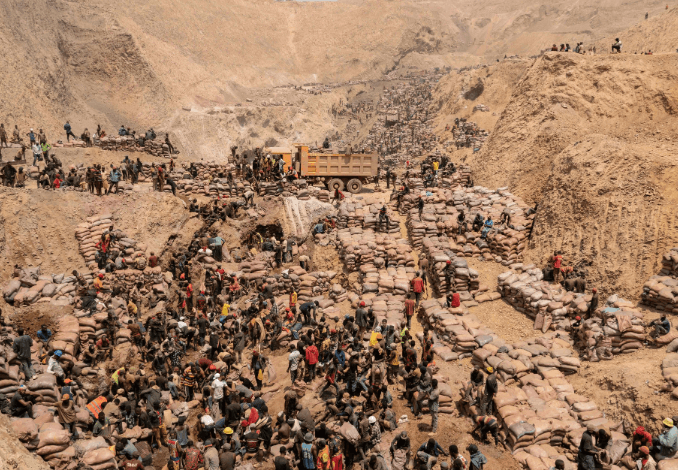
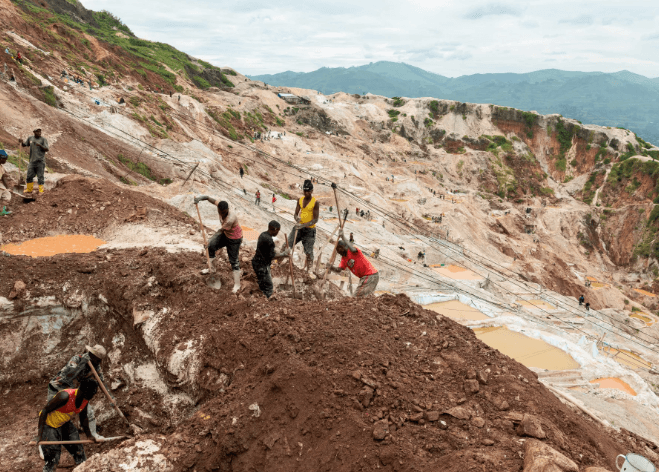
A tragic mine landslide in the Democratic Republic of the Congo has claimed more than 200 lives, with officials confirming that 70 of the victims were children. The disaster, which struck one of the country’s artisanal mining sites, has shocked communities and drawn international attention to the dangers faced by miners in the region.
Collapse at Artisanal Mine
According to government reports, the landslide occurred unexpectedly, burying miners and local residents who were working at or near the site. Emergency responders and community volunteers rushed to the scene, but rescue efforts were hampered by unstable terrain and heavy debris. Officials warned that the death toll could rise as rescue teams continue to search for survivors. The tragedy has once again highlighted the risks associated with poorly regulated artisanal mines, where safety standards are often minimal or nonexistent.
Children Among the Victims
The government confirmed that 70 children were among those killed, underscoring the vulnerability of younger members of mining communities. Many children in the area are involved in mining activities, either to support their families or due to lack of educational opportunities. Local authorities have called for increased oversight of mining operations to prevent future disasters. They also urged support for the affected families, many of whom have lost multiple members in the incident.
Response and Relief Efforts
Relief agencies and government officials are coordinating to provide medical care, food, and shelter to survivors and bereaved families. Humanitarian groups have appealed for donations and international assistance to help cope with the scale of the tragedy. The incident has sparked renewed calls for stronger regulations and safety protocols in the mining sector, particularly in informal mining areas where accidents are common, and oversight is limited. As DR Congo mourns the loss of hundreds of lives, the disaster serves as a grim reminder of the ongoing risks faced by miners and the urgent need for reforms to protect vulnerable communities.
