




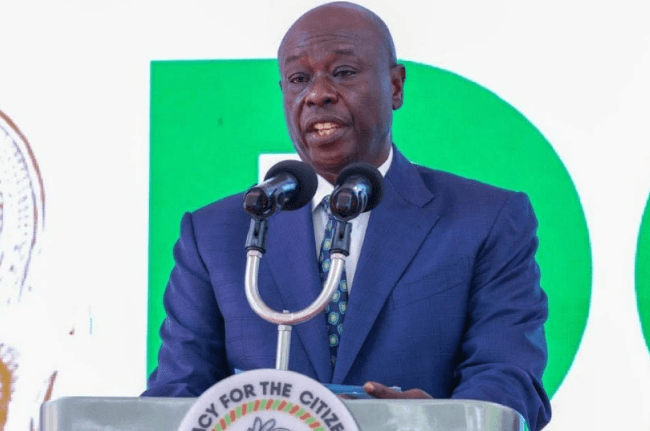
Former Deputy President Rigathi Gachagua has criticized the government’s proposed Supplementary Budget II for the 2025/26 financial year, accusing President William Ruto’s administration of planning to misuse billions of shillings through increased allocations to key government offices and agencies. In a statement shared online, Gachagua alleged that approximately Ksh.6.2 billion allocated under the supplementary budget could be diverted for political purposes rather than public service delivery.
According to the Democracy for the Citizens Party (DCP) leader, the funds have been directed to institutions including State House, the Office of the Deputy President, the State Department for Internal Security, and the National Intelligence Service (NIS) under expenditure items such as operations, maintenance, and security activities.
Gachagua argued that the additional funding could be used to finance political campaigns, influence lawmakers, and support various government-backed empowerment initiatives ahead of upcoming electoral contests. The former Deputy President also questioned the timing of the increased spending, saying it comes at a time when many critical sectors continue to struggle with inadequate funding.
He pointed to challenges facing the healthcare and education sectors, noting shortages of essential medicines in hospitals, financial difficulties facing cancer patients, delayed capitation for schools, and funding gaps affecting university and college students. Gachagua maintained that government priorities should focus on strengthening public services rather than increasing allocations to administrative offices.
The Treasury’s Supplementary Budget II proposes an additional Ksh.17.29 billion in expenditure, pushing total government spending for the 2025/26 financial year to approximately Ksh.4.6 trillion. Among the beneficiaries of the revised budget:
- The Sports Department is set to receive an additional Ksh.4.1 billion, bringing its allocation to Ksh.29.26 billion.
- Micro, Small and Medium Enterprises (MSMEs) will receive an extra Ksh.3.8 billion, increasing their funding to Ksh.12 billion.
- The National Intelligence Service (NIS) is earmarked for an additional Ksh.3.5 billion, raising its budget to Ksh.64.9 billion.
- State House is expected to receive an extra Ksh.1 billion, pushing its allocation to Ksh.18.54 billion.
- The Office of the Deputy President will receive an additional Ksh.200 million, increasing its budget to Ksh.5.3 billion.
- The education sector will get an extra Ksh.1.5 billion, bringing its total allocation to Ksh.132.6 billion.
The proposed budget adjustments come amid growing public concern over government expenditure and the rising cost of living. The debate has intensified as policymakers explore ways to finance the 2026/27 budget, with concerns that additional taxes may be introduced to support government spending. As discussions continue, the supplementary budget is expected to attract close scrutiny from lawmakers, economists, and citizens concerned about fiscal discipline and the prioritization of public resources.
