



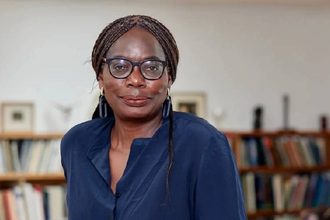


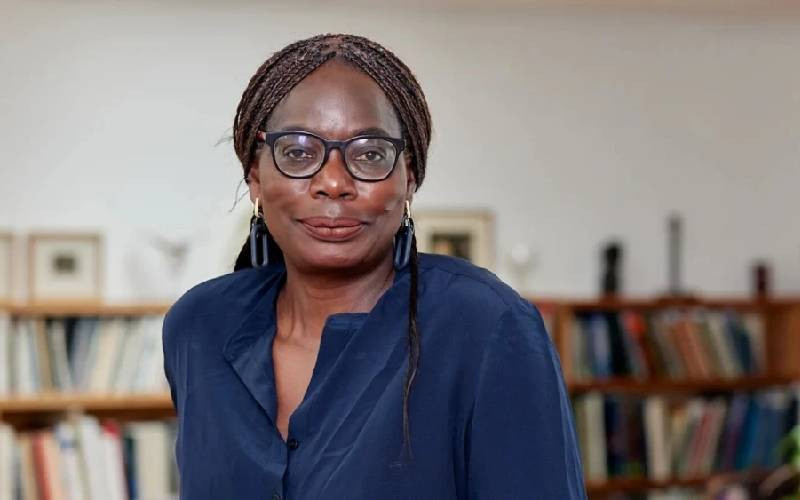
Kenyan Professor Phoebe Okowa has been re-elected to serve as a judge of the International Court of Justice (ICJ) for another nine years, extending Kenya’s representation at the United Nations’ principal judicial body until 2036. Okowa secured her re-election during voting conducted by the United Nations General Assembly and Security Council in New York on Tuesday, November 3, 2026. She received 183 votes in the General Assembly and 13 votes in the 15-member Security Council, earning one of the five available positions after several rounds of voting involving nine candidates.
Her victory received a boost after Sierra Leone withdrew its candidate, Professor Charles Chernor Jalloh, and backed the Kenyan professor in a move intended to preserve Africa’s representation on the court. In a statement, Sierra Leone’s Permanent Mission to the United Nations confirmed the withdrawal, expressing support for Okowa’s candidature.
Five Judges Elected to the International Court of Justice
Okowa was elected alongside four other candidates: Professor Dapo Akande of the United Kingdom, François Alabrune of France, Mahmoud Daifallah Hmoud of Jordan and Rena Lee of Singapore. The five successful candidates will officially assume their nine-year positions on February 6, 2027, with their terms running until February 5, 2036. Her re-election has attracted recognition from several Kenyan leaders, including President William Ruto, who celebrated her achievement and acknowledged her contribution to international legal affairs.
In a message posted on X on Wednesday, November 4, Ruto congratulated the Kenyan professor, describing her victory as an important achievement for the country. Former Chief Justice David Maraga also joined the list of leaders celebrating Okowa, noting that her election demonstrated the international community’s confidence in her legal expertise. Maraga described the outcome as a strong endorsement of her ability to advance international justice and the rule of law at a time when global governance faces significant challenges.
Foreign Affairs PS Welcomes Okowa’s Re-election
Foreign Affairs Principal Secretary Korir Sing’oei also welcomed the election, saying the outcome reflected the confidence the international community had placed in Okowa’s ability to serve on the court. Sing’oei expressed appreciation to members of the UN General Assembly and Security Council who supported Kenya’s candidate. He further recognised Sierra Leone, South Korea and Ecuador for withdrawing their respective candidates following the third round of voting, saying their decisions helped prevent an extended electoral contest.
Okowa’s Journey to the International Court of Justice
Okowa initially joined the International Court of Justice in November 2025 after being elected to replace Somali judge Abdulqawi Ahmed Yusuf, who had resigned from the position. Her first appointment covered the remaining period of Yusuf’s term, which was scheduled to conclude on February 5, 2027. Her latest election now gives her a full nine-year mandate. Beyond her judicial responsibilities, Okowa is a Professor of Public International Law at Queen Mary University of London.
She previously served on the United Nations International Law Commission, becoming the first African woman to join the expert body responsible for advancing the development and codification of international law. The Kenyan jurist holds a Bachelor of Laws degree from the University of Nairobi, a Bachelor of Civil Law degree and a doctorate from the University of Oxford. She has also served as a member of the Permanent Court of Arbitration in The Hague, Netherlands. Her initial appointment to the ICJ in November 2025 marked a historic achievement, making her the first Kenyan to serve on the court since its establishment in 1945.
Understanding the Role of the International Court of Justice
The International Court of Justice is headquartered in The Hague, Netherlands, and serves as the principal judicial organ of the United Nations. Its primary responsibility is to resolve legal disputes between sovereign states that submit cases before it. The court also provides advisory opinions on legal questions referred to it by authorised United Nations institutions and agencies.
The ICJ operates differently from the International Criminal Court (ICC). While the ICC prosecutes individuals accused of serious international crimes, the ICJ handles disputes involving states and does not conduct criminal trials against individuals. Okowa’s re-election ensures Kenya will maintain representation at the international court for another nine years, with the professor expected to continue contributing to the interpretation and application of international law.
