








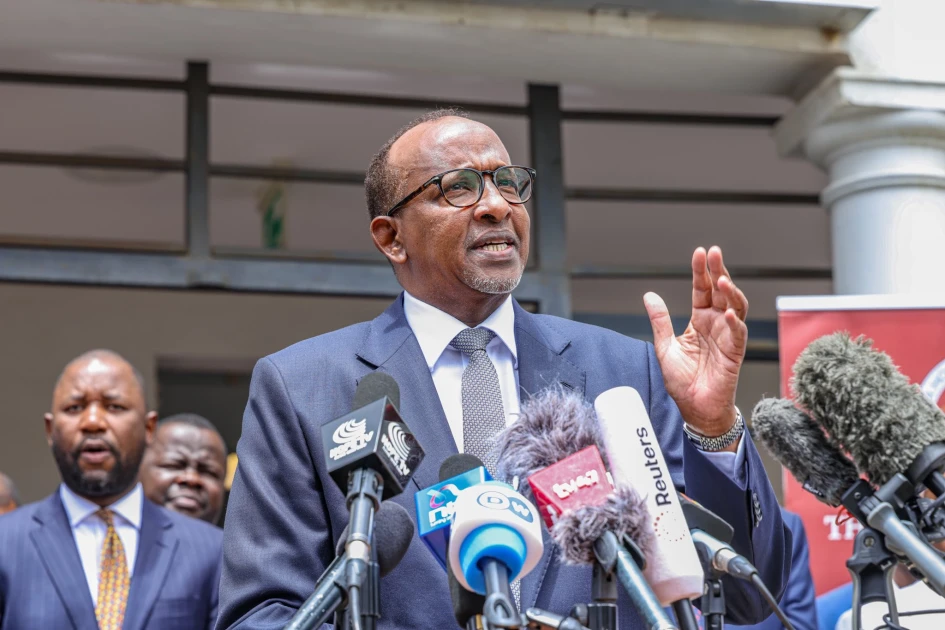
Health Cabinet Secretary Aden Duale has announced that Kenya has completed contact tracing for all 135 people who interacted with the country’s first confirmed Ebola patient, as the government steps up measures to prevent further transmission of the virus. Duale made the announcement on Tuesday, November 3, 2026, while appearing before the National Assembly’s Committee on Delegated Legislation, where he updated lawmakers on the country’s preparedness and response to the outbreak.
The CS described the achievement as a major milestone in Kenya’s containment efforts, maintaining that authorities had successfully identified everyone who may have been exposed to the patient. According to Duale, the contacts include passengers and crew members who travelled alongside the index patient, airport employees, immigration and customs officers, healthcare workers and members of the patient’s family. He said the government had also managed to trace an individual who travelled with the index patient before proceeding to Mogadishu, Somalia.
We have done 100 per cent contact tracing. The only country that did is Kenya. Kenya should be appreciated, should be globally celebrated, not condemned through travel
CS Aden DualeThe CS further disclosed that 45 healthcare workers were among the 135 identified contacts and had been placed under quarantine as part of the precautionary measures.
Kenya Seeks to Have Saudi Arabia Lift Ebola-Related Travel Restrictions
During his appearance before lawmakers, Duale also addressed travel restrictions imposed by Saudi Arabia following the confirmation of Ebola in Kenya. The CS criticised the restrictions, arguing that blanket travel advisories were not consistent with international public health recommendations, which emphasise disease surveillance, early detection and containment. He maintained that Kenya had implemented the necessary measures to monitor exposed individuals and prevent further spread of the virus.
Duale revealed that the Ministry of Foreign Affairs had formally engaged Saudi authorities over the restrictions, with diplomatic discussions underway to have the travel advisory reviewed. He added that the World Health Organization (WHO), Africa Centres for Disease Control and Prevention (Africa CDC) and the Kenyan Ministry of Health had also reached out to Saudi officials.
According to the CS, Saudi Arabia was reviewing its position, with the Kenyan government hopeful that the discussions would result in a favourable decision. He also confirmed that Kenya had notified other countries through which the index patient and identified contacts had travelled, in accordance with international health regulations.
Duale Defends Ebola Regulations Introduced Without Public Participation
The Health CS also defended the government’s decision to introduce Ebola prevention and control regulations without following the conventional public participation process. Appearing before the parliamentary committee, Duale argued that the seriousness and urgency of the outbreak required the government to take immediate action rather than delay the implementation of necessary health measures.
He cited Section 5A(2) of the Public Health Act, saying the law grants the Health Cabinet Secretary authority to introduce regulations where urgent public health intervention is required. He maintained that the regulations were necessary to strengthen the country’s response and protect the public against potential transmission.
Government Assures Quarantined Individuals of Proper Care
Addressing concerns about the welfare of people placed under quarantine, Duale assured lawmakers that all identified contacts were receiving adequate care and supervision.
He said those under quarantine had been provided with accommodation, food, medical attention and continuous monitoring by healthcare personnel. The CS explained that each individual had been allocated a separate room to minimise the possibility of transmission, while additional infection prevention and control measures had been introduced at designated facilities.
He further disclosed that healthcare workers involved in managing the outbreak had received specialised training and were equipped with appropriate personal protective equipment (PPE). The Ministry of Health had also trained medical personnel on safe burial procedures to ensure that the risk of Ebola transmission was minimised during the handling of deceased patients.
Kenya Strengthens Regional Surveillance Following Patient’s Travel History
Duale also provided details of the index patient’s movements before arriving in Nairobi, noting that the individual had travelled approximately 3,000 kilometres from western Democratic Republic of Congo (DRC). The extensive journey raised the importance of regional cooperation and cross-border surveillance in identifying individuals who may have come into contact with the patient.
The CS noted that Rwanda had initially closed its border following the outbreak but later reopened it. He maintained that Kenya had continued coordinating with other countries to ensure that relevant health authorities were informed about the patient’s movements and possible exposure risks.
Duale Hints at Positive Developments Among Patients and Contacts
Towards the end of his appearance before the committee, Duale hinted at encouraging developments involving patients receiving treatment and individuals currently under quarantine. Although he did not disclose further details, the CS suggested that the Ministry of Health expected to share positive updates with Kenyans.
The government has maintained that surveillance, contact tracing, quarantine and other containment measures remain in place as health authorities continue monitoring the situation. The Ministry of Health is also working with international health organisations and regional partners to strengthen preparedness and prevent further spread of the disease.
