








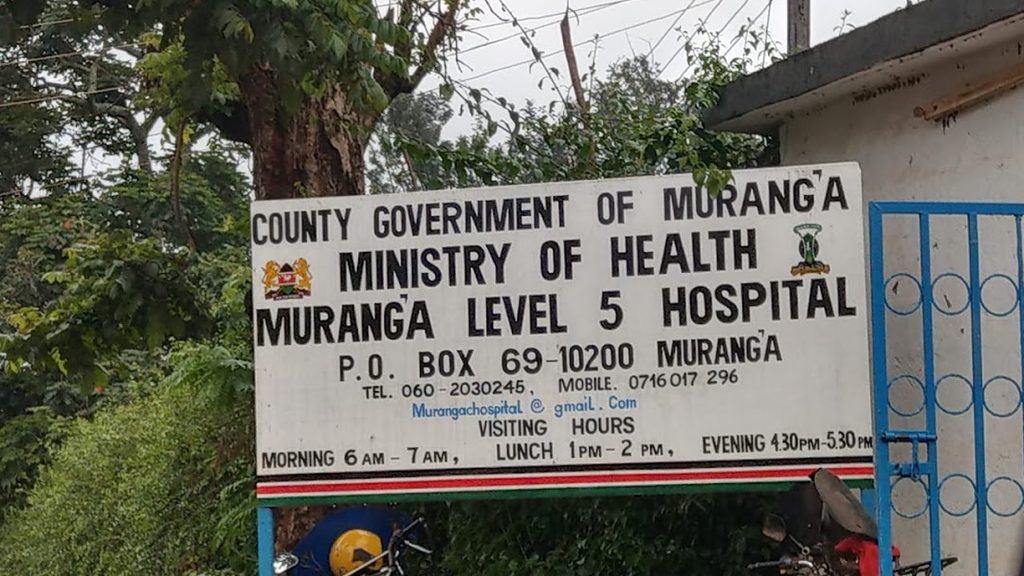
Health Cabinet Secretary Aden Duale has revealed that Murang’a County’s digital health system was hosted on a platform belonging to the National Intelligence Service (NIS) during former President Uhuru Kenyatta’s administration. Speaking during an interview on Citizen TV’s Sunday Live, Duale said Murang’a was among three counties that previously relied on the NIS-linked platform to manage their health systems.
According to the CS, Makueni and Tharaka-Nithi counties agreed to migrate their systems to the National Digital Health Integration System under the Digital Health Agency (DHA), while Murang’a remained on its existing platform. Duale claimed that the Ministry of Health had held discussions with Murang’a Governor Irungu Kang’ata for nine months in an attempt to facilitate the transition, but the two sides had yet to reach an agreement.
Murang’a Accuses Ministry of Disrupting Health Services
The remarks come amid a dispute between Murang’a County and the Ministry of Health over the reported shutdown of the county’s AfyaKE digital health platform. The county previously accused the ministry of disabling the system, claiming the move disrupted services at health facilities that depended on it to access patient records and process claims under the Social Health Authority (SHA).
Murang’a subsequently moved to court to challenge the shutdown, arguing that the transition to the Health Management Information System (HMIS) had affected the operations of more than 170 health facilities. In its court filings, the county also raised concerns about HMIS, arguing that the system lacked the capacity to support telemedicine services, which it considers an important component of healthcare delivery.
Ministry Denies Ownership of AfyaKE
The Ministry of Health has, however, rejected claims that it owns or controls the AfyaKE platform. In a statement issued on October 15, 2026, Duale maintained that the system was developed through a private arrangement between the Murang’a County Government and its developers. The CS further stated that the ministry did not possess the system’s source code and was therefore not responsible for managing it.
Duale also addressed concerns surrounding the platform’s certification, saying the Digital Health Agency had not declined to certify AfyaKE. He maintained that neither the county government nor the system’s developers had submitted an application for certification. The dispute highlights the ongoing disagreements over the management, integration and certification of digital health systems as Kenya continues to implement reforms aimed at improving healthcare delivery through technology. As the matter unfolds, the court challenge could provide further clarity on the issues surrounding AfyaKE, the transition to HMIS and the responsibilities of the national and county governments in managing digital healthcare platforms.
