



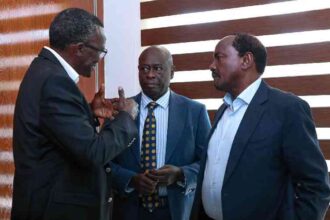


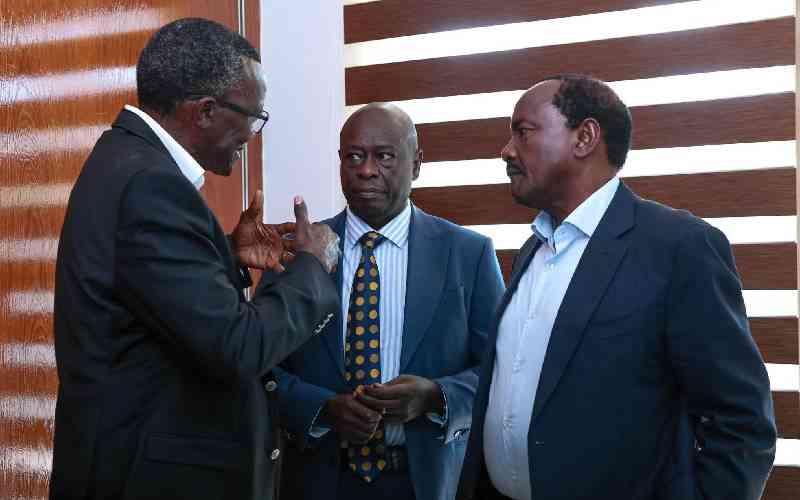
Opposition leaders have announced plans to boycott a scheduled meeting with the Independent Electoral and Boundaries Commission (IEBC), accusing the electoral agency of failing to operate independently and allegedly acting under the influence of President William Ruto. The leaders, led by Democracy for the Citizens Party (DCP) leader Rigathi Gachagua, United Green Movement (UGM) leader David Maraga and Democratic Party (DP) leader Justin Muturi, also threatened to mobilise Kenyans for mass action over concerns about the commission’s preparedness to conduct a credible and transparent 2027 General Election.
Speaking during a press briefing on Wednesday, November 25, the opposition leaders questioned the circumstances surrounding the meeting, arguing that the government should not appear to be directing engagements between political parties and the electoral commission. Gachagua claimed that the meeting had been organised through the State Department for Interior, raising questions about the government’s involvement in discussions concerning the independence of the IEBC.
The former Deputy President maintained that the opposition would not participate in what he described as an attempt to legitimise decisions already made by the commission. He further questioned the IEBC’s readiness to conduct upcoming by-elections, claiming that its contract with election technology provider Smartmatic had expired on Tuesday, November 24. He raised concerns about the implications of the alleged contract expiry for the commission’s technological preparedness ahead of the 2027 polls.
Gachagua also announced that the opposition was considering organising public engagements with the electoral commission in January 2027 if its concerns remained unresolved. He insisted that President Ruto’s remarks would not deter the opposition from pushing for electoral accountability and transparency.
Maraga Questions IEBC’s Commitment to Electoral Reforms
Former Chief Justice David Maraga also criticised the commission, accusing it of failing to adequately address concerns previously presented by opposition leaders. Maraga argued that the IEBC had convened meetings based on its own agenda rather than the issues that opposition representatives wanted addressed.
He maintained that attending Wednesday’s meeting would give the impression that the opposition supported decisions they had not been adequately consulted on. The former Chief Justice further raised concerns about the independence of the electoral body, accusing President Ruto of undermining its autonomy through remarks warning against planned demonstrations.
Maraga disclosed that opposition leaders were considering mass action as part of their efforts to pressure the commission into addressing outstanding electoral concerns. He also called for the abolition of the National Tallying Centre, arguing for changes to the existing electoral management framework to strengthen transparency and accountability. Additionally, Maraga revealed that the opposition had prepared a Bill intended to improve transparency in the electoral process and address concerns surrounding the management and announcement of election results.
Muturi Raises Concerns Over IEBC Technology and Staff Changes
Meanwhile, Democratic Party leader Justin Muturi criticised President Ruto and Interior Cabinet Secretary Kipchumba Murkomen over their remarks concerning the opposition’s planned demonstrations. Muturi questioned why government officials were responding to concerns directed at the IEBC instead of allowing the commission to independently address the issues raised by political leaders. He argued that the electoral body should take responsibility for explaining its decisions and providing assurances regarding the transparency of the upcoming elections.
The former Attorney General also challenged the IEBC chairperson’s position that live-streaming election results would require billions of shillings. Muturi argued that media organisations could play a role in facilitating the live transmission of results, questioning the projected cost of implementing the proposal.
He further alleged that 24 IEBC staff members had been transferred on Tuesday, November 24, raising additional concerns about changes within the electoral institution ahead of the 2027 General Election. Muturi insisted that the opposition would not accept what he described as attempts to intimidate or force them into accepting electoral arrangements they considered questionable.
Opposition Demands Transparency Ahead of 2027 Elections
The three leaders maintained that their concerns must be addressed before the country heads into the 2027 General Election. Among the issues they want the commission to clarify are the management of election technology, the transmission of results, the transparency of the tallying process and the independence of electoral officials. They argued that public confidence in the electoral process depends on the IEBC demonstrating its ability to conduct elections without political interference.
The opposition also maintained that the commission must provide clear explanations regarding its preparations and engage stakeholders on matters affecting the credibility of the next General Election. Their threatened boycott and planned mobilisation signal growing political tensions surrounding preparations for the 2027 polls, with the IEBC facing renewed calls to demonstrate its independence and readiness to oversee a free, fair and transparent election.
