








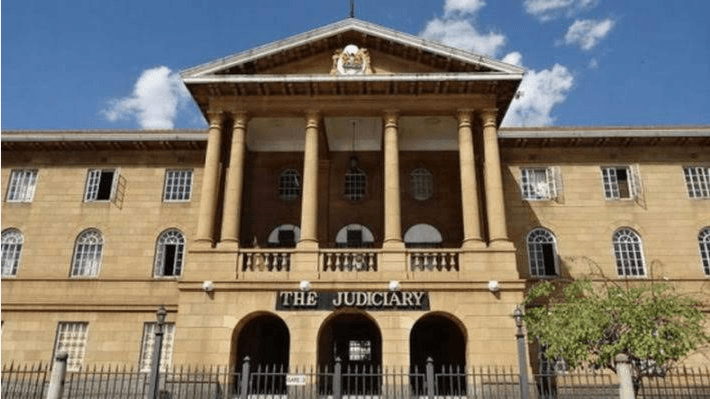
The High Court has ruled that Parliament has no authority to impose timelines on the National Land Commission (NLC) when carrying out its constitutional mandate to investigate and recommend remedies for historical land injustices.
The judgment follows a petition filed by activist and Busia Senator Okiya Omtatah, who challenged amendments that sought to restrict NLC’s determinations to one year and the implementation of remedies to three years. The court found these provisions unconstitutional.
According to the ruling, Parliament acted outside its powers by attempting to limit a constitutional function that the Constitution itself does not restrict.
Omtatah had argued that the imposed timelines would unfairly lock out victims of historical land injustices, especially given the Commission’s consistent underfunding and the heavy backlog of unresolved cases. He also challenged earlier attempts to impose a 10-year limitation on such claims.
Delivering the decision, Justice Chacha Mwita emphasized that the Constitution must be interpreted holistically and harmoniously.
He ruled that Section 14(9) of the Amendment Act is unconstitutional because the NLC’s mandate to review complaints and recommend redress is not tied to any timeline under the Constitution. Additionally, the court noted that Section 15, which covers historical land injustices from 1895 to August 2010, does not impose deadlines for processing claims.
The judge further held that Parliament does not have powers under Article 67(e) to introduce legislation that narrows or restricts the Commission’s constitutional role.
As a result, the High Court declared that attempts by Parliament to impose a five-year or any fixed period for filing or processing historical land injustice claims are inconsistent with the Constitution. The Amendment Act was therefore declared unconstitutional to the extent that it sought to limit the NLC’s longstanding mandate.
