




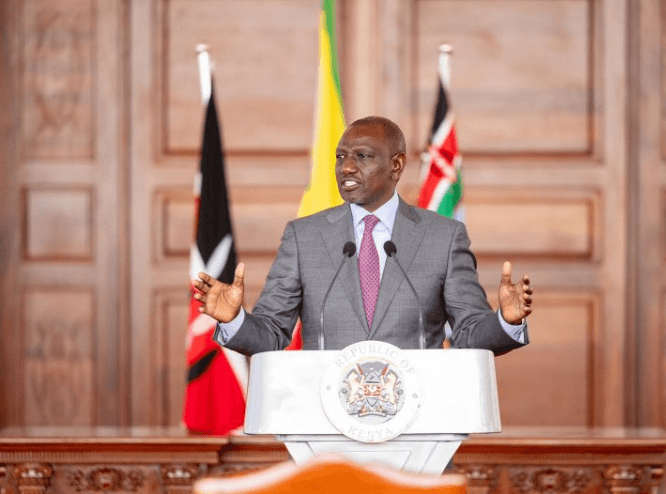
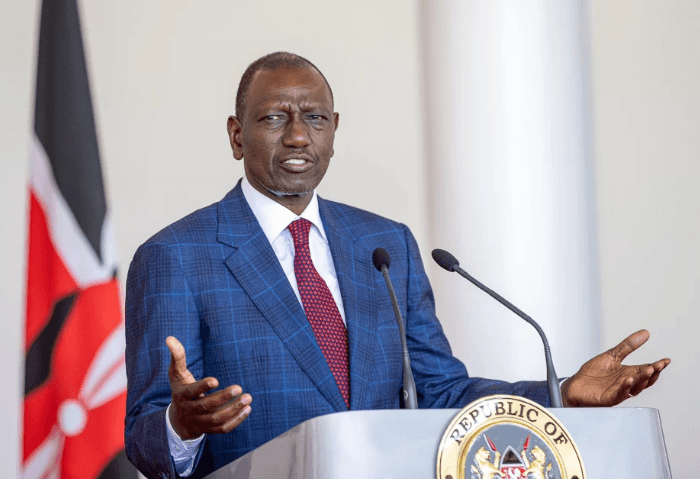
The High Court has delivered a landmark ruling declaring that President William Ruto acted outside the Constitution when he created a special body to advise on the compensation of victims of police brutality. According to the court, matters relating to victim compensation fall squarely within the mandate of the Kenya National Commission on Human Rights (KNCHR), and not the Executive. In its decision, the court directed that the disputed report be handed over to the KNCHR. The Commission is now required to take over the process, implement the necessary executive steps, and make any amendments needed to align the compensation framework with the Constitution.
30 Days to Comply or Risk Invalidity
The court further ordered that all corrective amendments must be completed within 30 days. While the judge clarified that the President’s proclamations will not be automatically nullified once the deadline lapses, he cautioned that continued non-compliance would render them unconstitutional and therefore invalid. The ruling underscored that the KNCHR, as an independent constitutional body, is the institution empowered to oversee issues of victim compensation — not a committee appointed by the President.
Proclamations Declared Unconstitutional
As a result, the court formally declared the President’s proclamations establishing the advisory panel unconstitutional. The case was filed by lawyer Levy Munyiri, who argued that the President had no legal basis to form the committee announced in a Kenya Gazette notice dated August 25.
About the Disputed Panel
The impugned panel was initially set up to coordinate the compensation of victims affected by police violence during the youth-led anti-government demonstrations held this year and last year. These protests resulted in over 120 deaths and hundreds of injuries, drawing widespread national and international concern. The committee was chaired by Prof. Makau Mutua, President Ruto’s senior advisor on constitutional affairs and human rights. Faith Odhiambo, President of the Law Society of Kenya (LSK), was appointed Vice-Chair, supported by 12 members, two technical experts, and two joint secretaries.
However, Ms. Odhiambo resigned from the panel shortly after its formation. Her position was later taken up by KNCHR Chairperson Claris Awuor Ogangah-Onyango, signaling early tension regarding the committee’s structure and legitimacy.
Significance of the Ruling
The judgment reinforces the constitutional independence of the KNCHR and sets a strong precedent on the limits of executive authority. It also provides a clear framework for how the country should handle victim compensation in cases involving state-linked violations.
The court’s decision is expected to reshape the government’s approach to addressing the aftermath of police violence and may influence future executive actions involving human rights matters.
