





Kenya’s Independent Electoral and Boundaries Commission (IEBC) is raising the alarm over declining youth involvement in electoral activities, following a worrying voter turnout pattern witnessed in recent registration exercises and the November 27 by-elections. The concerns came to the surface during a heated post–by-election conference on Tuesday, where IEBC commissioners and youth representatives engaged in tense exchanges over who should bear responsibility for dwindling youth participation.
Youth Missing in Action Despite Being Majority of Voter Base
Although young people make up the largest share of the 2022 voter register, their presence at last week’s by-elections was noticeably thin. IEBC Vice Chairperson Fahima Araphat did not mince her words, faulting the youth for what she termed as a lack of interest, while Commissioner Prof. Francis Aduol described the turnout as “pathetic.”
According to Aduol, most of the voters who turned up at polling stations were elderly citizens, especially older women, highlighting a widening gap in how different age groups engage politically.
Heated Exchanges at Stakeholder Forum
What was expected to be a routine post-election review quickly transformed into a fiery debate. Youth leaders accused the IEBC of failing to understand or effectively engage young citizens, while commissioners pushed back, insisting that mobilization should be a shared responsibility.
Prof. Aduol questioned why the public expects commissioners, many of whom are older, to lead conversations on platforms designed for youth engagement. He noted that Kenyans over 60 make up only five percent of the population, suggesting that younger voices should also take leadership roles in mobilization efforts.
His remarks sparked strong reactions from youth representatives.
Fidel Ongoya, one of the vocal participants, urged the IEBC to acknowledge the gravity of the issue. “This is our future,” he emphasized, calling for a genuine commitment to reforms that can rebuild trust with young voters.
IEBC Chairperson Attempts to Ease Tensions
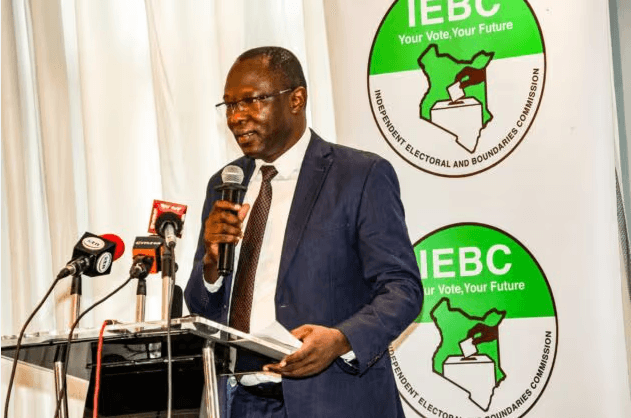
IEBC Chairperson Erastus Ethekon stepped in to cool down the heated exchange, assuring the forum that the commission will scale up efforts to register young voters ahead of the 2027 General Election.
Ethekon emphasized that the upcoming mass voter registration drive will be designed to better reach young people, whose participation is crucial to achieving the commission’s ambitious targets.
Slow Registration Numbers Reveal Deeper Problem
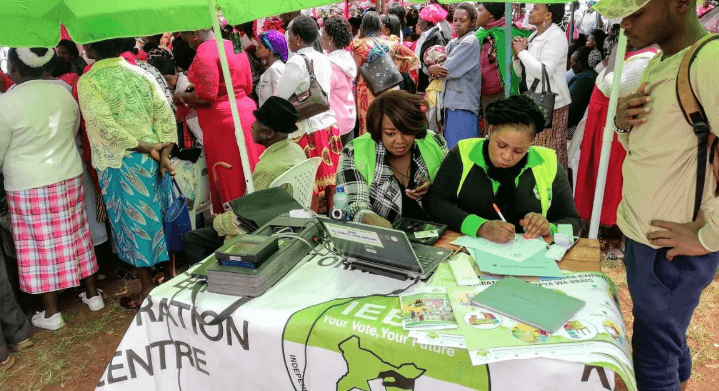
Fresh data shared by the IEBC paints a clearer picture of the challenge ahead. Since the launch of continuous voter registration on September 29, only 148,315 new voters had registered by December 5—an average of just 2,000 per day across the entire country.
During the same period, 40,772 voters requested transfers and 493 updated their details
With a goal of registering 6 million new voters by 2027, the IEBC faces an uphill battle. The majority of these new registrations are expected to come from Kenyans under 35, who constitute nearly 70 percent of the unregistered eligible population.
Youth Groups Say IEBC Outreach Is Outdated
Youth advocates did not hold back in their criticism. Tabitha Oluoch from Siasa Place called out the commission for failing to communicate in ways that resonate with younger audiences. She pointed out that IEBC has a mere 1,000 followers on TikTok, a platform considered central for youth engagement.
According to Oluoch, the commission’s social media output is too rigid, formal, and disconnected from the realities of young Kenyans. She urged the IEBC to modernize its messaging by embracing creative, relatable, and interactive digital strategies.
A Growing Disconnect That Could Shape 2027
The tension between the IEBC and youth groups underscores a deeper concern: a widening gap between the commission’s communication approach and the expectations of young voters. With the 2027 General Election approaching, bridging this gap will be critical in ensuring meaningful youth participation.
For now, the IEBC maintains that it is committed to improving engagement. However, youth leaders insist that real change will require more than statements—it will require a deliberate shift in strategy, tone, and outreach.
