







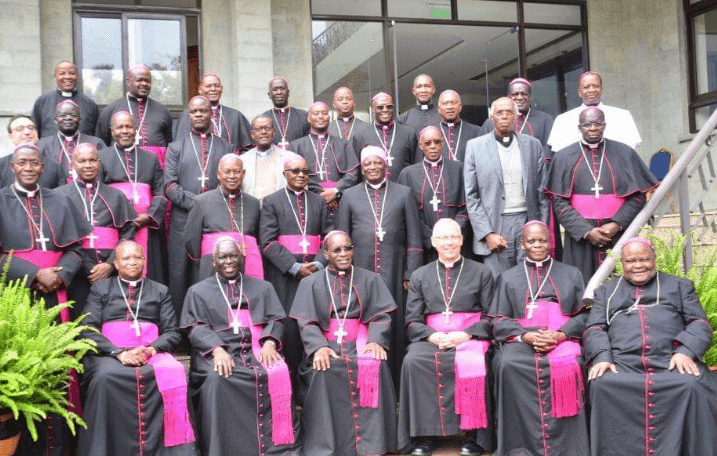
The Kenya Conference of Catholic Bishops (KCCB) has expressed deep concern over what it describes as a growing erosion of respect for human life in the country, warning that Kenya risks slipping into a culture marked by violence, corruption, trafficking and political intolerance if urgent reforms are not undertaken.
In a pastoral message titled “Protect Life and Prosper,” the bishops said the country is becoming increasingly desensitised to death, pointing to past tragedies such as Shakahola and recent killings reported in parts of the Rift Valley. They warned that many victims, often from vulnerable communities, are quickly forgotten and denied justice.
The bishops urged authorities to ensure accountability in all unresolved deaths and called on Kenyans to reaffirm the value of human life, saying society appears to have normalised violence. They also raised alarm over rising cases of human trafficking, urging the government to intensify efforts to dismantle trafficking networks and protect vulnerable citizens.
On road safety, the clerics blamed reckless driving and corruption within enforcement agencies for the increasing number of road accidents. They called on passengers to refuse boarding vehicles driven dangerously and urged police officers to eliminate bribery on roads, which they said continues to cost lives.
The bishops further condemned growing political intolerance and the rise of “goonism,” saying disruptive behaviour at public events is undermining national unity. They criticised leaders who use abusive language in public discourse and warned that such conduct is harmful to young people who view them as role models.
They also decried what they termed a patronage culture that enables violence and the disruption of meetings, including religious gatherings, stating that such actions could not persist without protection from influential figures and weak enforcement of the law.
In their message, the bishops emphasised that leadership should be exercised with responsibility and restraint, noting that politics is a public duty rather than a personal privilege. They also called for respect towards opposition leaders and warned against politicising religious platforms.
On the health sector, the bishops raised concern over delayed government payments to faith-based hospitals, noting that Catholic health facilities are owed billions in arrears. They further questioned the effectiveness of the transition to the Social Health Authority (SHA), saying the system is facing serious operational challenges that must be addressed urgently.
In education, the bishops criticised the implementation of the Competency-Based Curriculum (CBC), describing it as costly and poorly rolled out. They urged the Ministry of Education to review the system and ensure that learners are not subjected to what they termed an experimental framework. They also expressed concern over efforts they believe are weakening the role of school sponsors.
The clergy also highlighted corruption as a major national challenge, saying it has become normalised and is being enabled by lack of strong political will. They cited a dispute involving alleged attempts to take over land belonging to Catholic sisters in Karen as an example of ongoing governance and property rights concerns.
On family matters, the bishops reaffirmed their support for marriage institutions but noted administrative challenges in civil registration, including delays in processing documents and shortages of marriage certificates.
They concluded by calling for prayers for peace in conflict-affected regions, including the Middle East, warning that global wars have ripple effects that also affect Kenya. They urged the government and citizens to take steps to cushion the country from external instability.
