






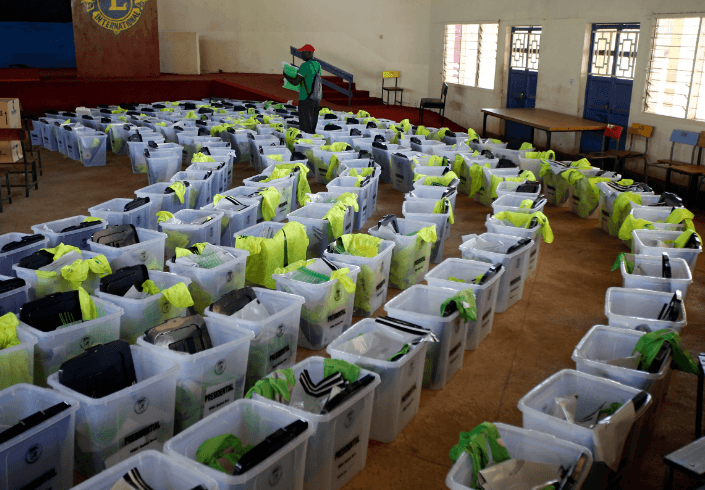
The Independent Electoral and Boundaries Commission (IEBC) has expressed concern about the current political environment, warning that rising tensions could negatively affect the conduct of future elections. The concerns were highlighted during a joint breakfast meeting between IEBC and the Kenya Private Sector Alliance, where stakeholders pointed to increasing fears around political violence, mistrust, and the growing role of money in elections.
Participants at the forum raised alarm over what they described as a growing culture of political “goonism,” where hired groups are allegedly used to influence political outcomes. They also cited concerns over voter manipulation through financial incentives.
Vimal Shah noted that Kenya is currently facing a serious trust deficit, with uncertainty surrounding electoral processes fueling anxiety among both citizens and the business community. He emphasized the need for clear electoral rules and a unified approach to resolving disputes, proposing the creation of a multi-agency taskforce to address emerging tensions.
IEBC Chairperson Erastus Edung Ethekon acknowledged the concerns raised but clarified that the commission has limited authority over issues such as political violence outside the official election period. He explained that the electoral code of conduct only becomes enforceable once elections are formally declared and candidates registered. Despite this, Ethekon assured stakeholders that the commission is operationally ready, although he admitted concerns remain about the overall environment in which elections will take place.
Ethekon revealed that some IEBC offices were previously attacked during the Continuous Voter Registration (CVR) exercise, underscoring the need for cooperation from the public to safeguard the electoral process. He stressed that the commission’s role is to facilitate citizens in exercising their democratic rights and should not be hindered.
On voter registration, the IEBC chair noted that the commission has fully transitioned to a biometric system that includes advanced identifiers, such as iris data. He urged Kenyans who registered under older systems, especially those who voted before biometric registration was introduced, to update their details to be included in the current register.
Ethekon also addressed the role of emerging technologies like artificial intelligence in elections, stating that any innovation must strictly comply with existing legal frameworks. He cautioned against unauthorized systems or processes that fall outside the law.
The chairperson further warned against premature announcement of election results by third parties. While acknowledging that results are publicly accessible and can be independently verified, he stressed that only the IEBC has the constitutional authority to declare the president-elect.
