







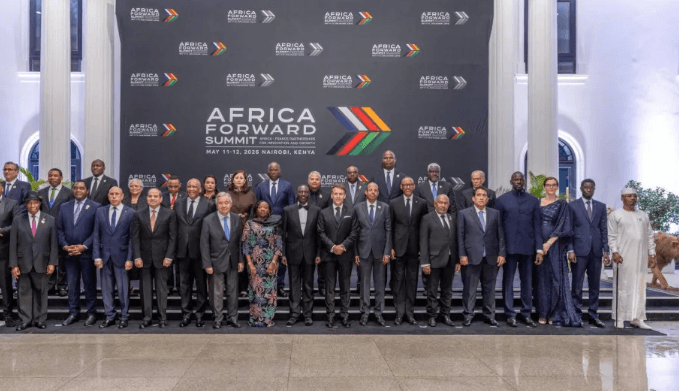
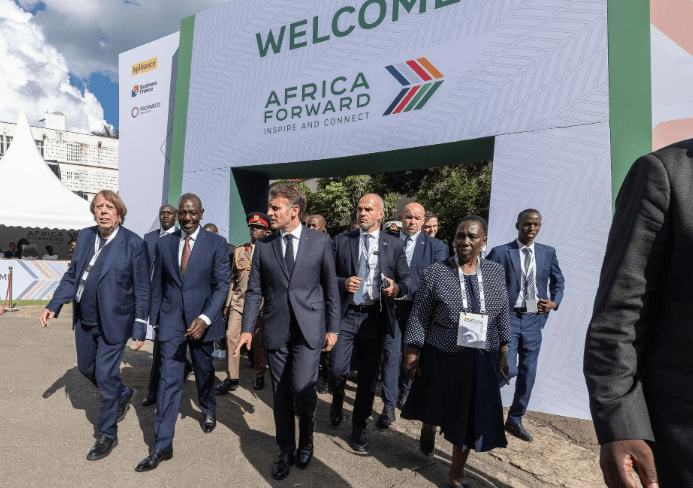
As the Africa Forward Summit wrapped up in Nairobi, a sense of renewed optimism swept across the continent. Leaders and policymakers left the high-level meeting with a shared vision—an Africa that is more self-reliant, sovereign, and less dependent on external aid.
The summit, co-hosted by Kenya and France, brought together African Heads of State, global leaders, and key stakeholders. Among those present were Emmanuel Macron, António Guterres, and Mahmoud Ali Youssouf. The gathering, also known as the Africa–France Partnerships for Innovation and Growth Summit, focused on redefining Africa’s role in a rapidly changing global landscape.
A key outcome of the summit was a joint declaration between African nations and France aimed at strengthening cooperation in innovation, trade, and development.
Central to the agreement is Africa’s push for:
- Greater autonomy in international partnerships
- Stronger resilience in the face of global economic shifts
- Enhanced peace and security cooperation
Leaders emphasized the need for open dialogue on geopolitical fragmentation, economic instability, and weakening global consensus all of which continue to impact Africa’s development trajectory.
Leveraging Natural Resources for Development
Africa holds a significant share of the world’s natural wealth, including vast reserves of minerals and precious metals. However, the continent has long struggled with the so-called “resource curse,” where wealth does not translate into widespread prosperity.
The new framework aims to reverse this trend by:
- Building African-owned data and AI systems
- Supporting local language technologies
- Ensuring digital development respects human rights and cultural diversity
This marks a strategic step toward strengthening Africa’s digital sovereignty.
Reforming Global Financial Systems
The summit also reignited calls for reforms in global financial institutions, which many African leaders say have historically disadvantaged the continent. António Guterres noted that Africa’s limited representation in decision-making bodies has contributed to inequitable financial systems. Similarly, William Ruto reiterated the need for Africa to have a stronger voice globally, including calls for permanent representation at the United Nations Security Council.
A Shift Toward Equal Partnerships
A recurring theme throughout the summit was the call for partnerships based on equality rather than dependency. Leaders stressed the importance of moving away from aid-driven relationships toward collaborations grounded in mutual respect and shared responsibility. President William Ruto emphasized that the future requires stronger cooperation built on fairness and sovereignty, rather than hierarchy.
The Africa Forward Summit signals a potential turning point for the continent. With a renewed focus on autonomy, innovation, and equitable partnerships, Africa is positioning itself to take greater control of its future. While challenges remain, the commitments made in Nairobi could lay the foundation for a more resilient and self-sustaining continent in the years ahead.
