






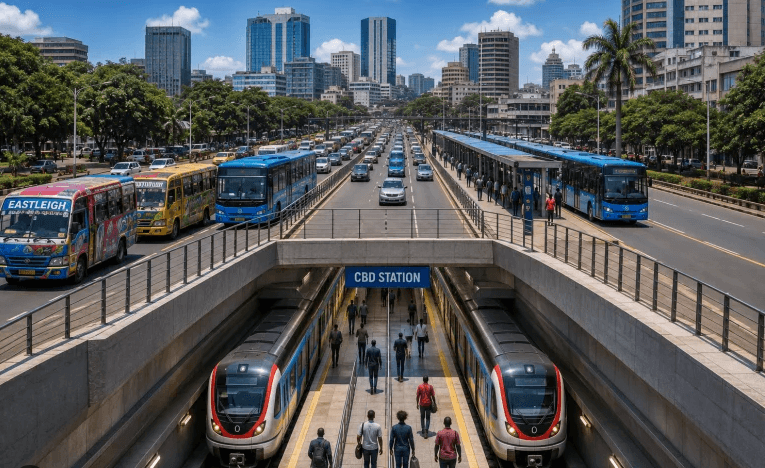

Nairobi County has taken a major step toward transforming urban transport after approving the first phase of an ambitious mass rapid transit system. The project, which includes an underground railway through the Central Business District (CBD) and a high-capacity rail link to Eastlands, is expected to significantly ease congestion and modernize mobility in the capital.
The approved framework sets the stage for a modern, efficient transit network designed to address Nairobi’s long-standing traffic challenges. The underground railway in the CBD aims to decongest the city center, where daily gridlock has affected productivity and increased commuting times. Meanwhile, the planned rail connection to Eastlands will provide a faster, more reliable transport option for thousands of residents who depend on public transit every day.
Why This Project Matters
Nairobi has experienced rapid population growth over the years, putting immense pressure on existing infrastructure. The new mass transit system is expected to:
- Reduce traffic congestion in key urban areas
- Cut commuting times for city residents
- Lower carbon emissions through improved public transport
- Boost economic activity by enhancing connectivity
This marks a shift toward sustainable urban planning and positions Nairobi among cities investing in modern transit solutions.
What to Expect in Phase One
Phase one focuses on laying the groundwork for the broader system. Key highlights include:
- Construction of an underground rail line within the CBD
- Development of a high-capacity rail corridor linking Eastlands
- Integration with existing transport systems
Further phases are expected to expand the network to other parts of the city, creating a comprehensive transit system.
Challenges Ahead
While the project promises major benefits, it will also face hurdles such as:
- High construction and financing costs
- Possible disruptions during implementation
- Coordination between national and county governments
Effective planning and stakeholder engagement will be critical to ensure successful delivery.
The approval of this mass rapid transit plan signals a bold move toward solving Nairobi’s transport crisis. If successfully implemented, it could redefine how residents move around the city and improve overall quality of life.
