






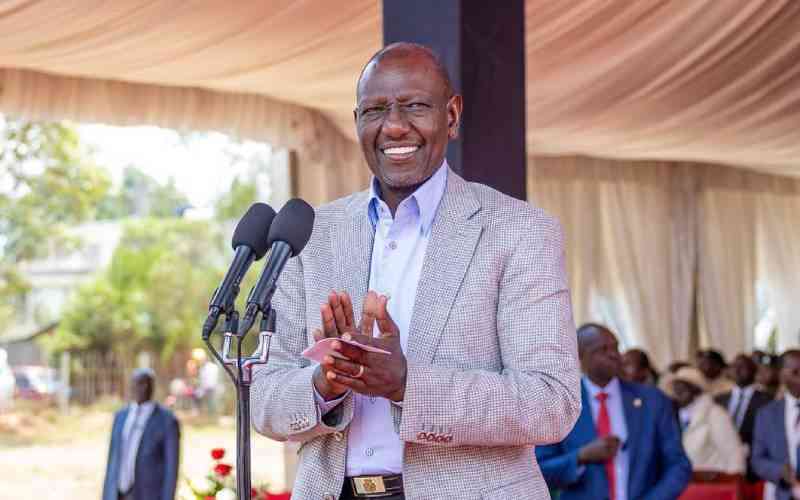
President William Ruto has expressed strong confidence in Kenya’s economic potential, stating that the country must rise to become an upper-middle-income economy within the next decade. His remarks underscore a bold vision anchored on strategic planning, sustained growth, and deliberate policy implementation aimed at transforming livelihoods and boosting national prosperity.
Speaking on Kenya’s development trajectory, President Ruto emphasized that achieving upper-middle-income status is not just an aspiration but a necessity. He pointed out that with the right mix of policies, investment, and governance, Kenya has the capacity to significantly elevate its economic standing within ten years. According to the President, this transformation will require a focused approach that prioritizes productivity, innovation, and value addition across key sectors of the economy. He noted that Kenya must move beyond subsistence and low-value economic activities to more competitive and high-value industries.
Ruto highlighted the importance of deliberate and well-coordinated development strategies in driving this transition. He stressed that government efforts will be centered on strengthening infrastructure, supporting industrial growth, and expanding opportunities for businesses and entrepreneurs. He further indicated that strategic investments in sectors such as agriculture, manufacturing, technology, and energy will play a critical role in accelerating growth. By improving efficiency and increasing output in these sectors, the country can generate more income, create jobs, and enhance overall economic resilience.
A key aspect of the President’s message was the need to empower Kenyans at all levels. He reiterated that economic transformation must translate into tangible benefits for citizens, including job creation, improved incomes, and better living standards. Ruto underscored the importance of supporting small and medium-sized enterprises (SMEs), which he described as the backbone of the economy. By providing access to financing, markets, and skills development, the government aims to unlock the potential of local businesses and drive inclusive growth.
The President also pointed to governance and accountability as crucial pillars in achieving the country’s economic goals. He noted that transparency, efficient public service delivery, and prudent use of resources will be essential in building investor confidence and ensuring sustainable development. He emphasized that both national and county governments must work together to implement policies effectively and eliminate inefficiencies that hinder growth.
While optimistic, Ruto acknowledged that the journey to upper-middle-income status will not be without challenges. Issues such as global economic uncertainties, unemployment, and inequality remain significant hurdles. However, he maintained that with determination and collective effort, Kenya can overcome these obstacles and stay on course toward its economic goals.
President Ruto’s call for Kenya to attain upper-middle-income status within ten years sets an ambitious but achievable target. His emphasis on deliberate strategies, inclusive growth, and strong governance reflects a comprehensive approach to national development. As the country moves forward, the success of this vision will depend on consistent implementation, collaboration, and the active participation of all stakeholders.
