







Hundreds of small-scale traders took to the streets of Nairobi’s Central Business District on Friday, August 28, 2026, protesting new customs valuation rules introduced by the Kenya Revenue Authority (KRA). The traders gathered outside the Kenya National Archives along Tom Mboya Street before marching toward Times Tower, where KRA’s headquarters are located.
Armed with banners, Kenyan flags and vuvuzelas, the protesters called for the review of the new valuation guidelines, saying the changes could significantly increase their operating costs.
The demonstrations brought together traders from key commercial centres, including Kamukunji, Gikomba and Nyamakima, many of whom rely on consolidated cargo to import goods such as clothes, electronics and household items, largely from China.
Traders Oppose 28% Valuation Increase
Under the revised guidelines, the minimum valuation benchmark for a 40-foot container carrying consolidated general cargo has increased from KSh2.5 million to KSh3.2 million. The change represents a 28 per cent increase, translating to an additional KSh700,000 on the minimum benchmark.
Traders say the increase could significantly cut into their profit margins, with some warning that smaller businesses may struggle to remain viable. They also fear that higher import costs could eventually be passed on to consumers through increased retail prices.
One trader from Kamukunji said the additional KSh700,000 would leave many small-scale importers with little or no profit. The traders have called on government agencies to reconsider the new valuation rules and engage them in discussions on a workable solution.
Shops Remain Closed in Nairobi CBD
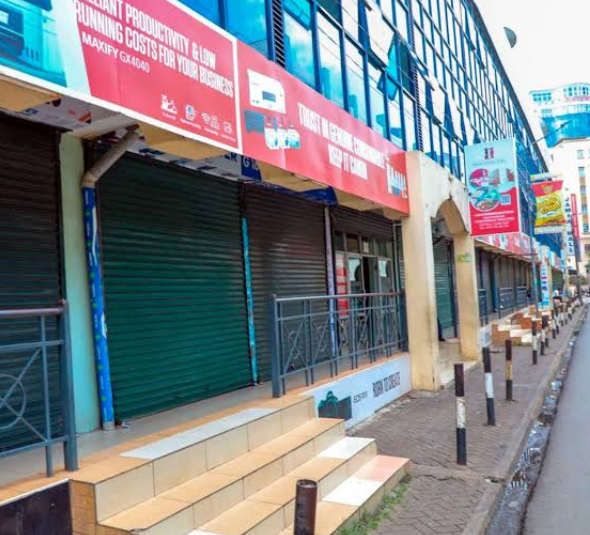
The protests also affected business operations in parts of the CBD, with several shops and retail outlets remaining closed during the morning. Although public transport and major roads continued operating on a limited basis, some business owners opted to keep their premises shut amid security concerns and in solidarity with the protesting traders.
KRA Responds to Traders’ Concerns
KRA has sought to clarify that the KSh3.2 million figure is not a flat tax charged on every container. The authority explained that the amount serves as a minimum reference benchmark used for simplified customs clearance and risk management.
KRA further stated that traders have the option of de-consolidating their cargo and having customs duties assessed based on the actual goods and itemised declarations. However, traders argue that making individual declarations may be difficult for micro-importers who operate with limited capital and depend on shared container space.
Calls for Dialogue
As the demonstrations continued, business leaders and trade associations urged the government and traders to engage in immediate dialogue. They warned that failure to resolve the dispute could lead to prolonged disruptions in Nairobi’s commercial sector and place additional pressure on small businesses and consumers.
The traders are now pushing for consultations with KRA and other relevant government agencies, hoping to find a solution that addresses revenue collection while protecting small-scale importers from unsustainable costs.
