





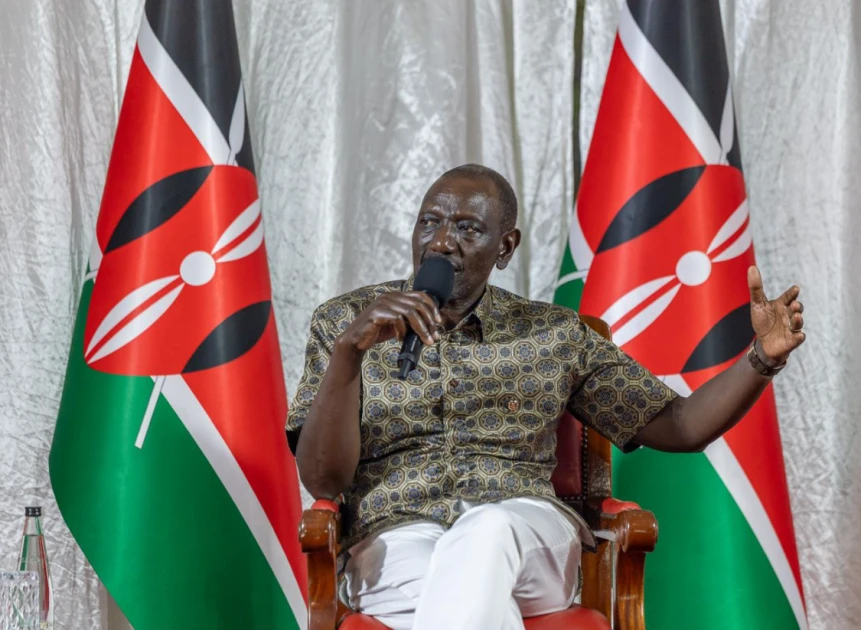
President William Ruto has explained how the proposed Dangote East Africa Petroleum Refinery in Lamu County was conceived, saying the project was driven partly by the need to strengthen Kenya and the region’s energy security. Speaking at State House in Mombasa on Thursday, a day after the refinery’s groundbreaking ceremony in Lamu, Ruto said the idea gained urgency after disruptions to global oil supply chains exposed the region’s vulnerability to external shocks.
The President linked the discussions to challenges experienced in accessing petroleum products during periods of instability in the Middle East, including disruptions around the Strait of Hormuz. According to Ruto, the government began exploring ways of developing additional local refining capacity rather than relying heavily on imported finished petroleum products.
Ruto Sent Team to Engage Dangote
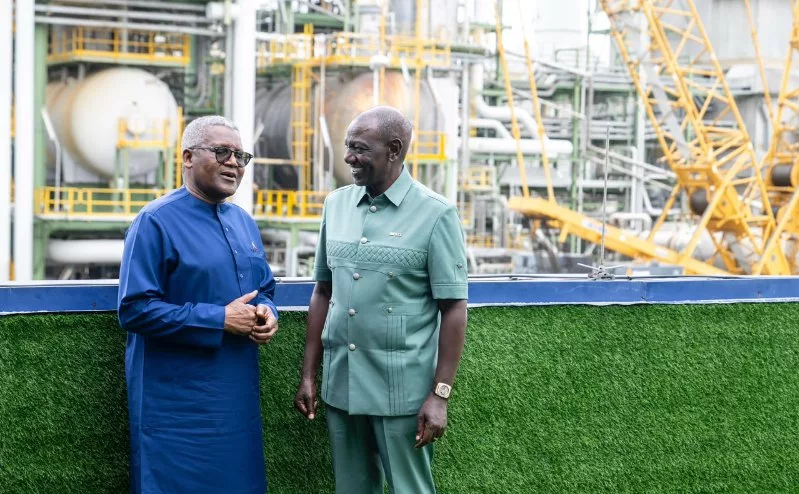
Ruto said he had been considering the possibility of a refinery before directing officials from his office to engage Nigerian industrialist Aliko Dangote. The officials visited Dangote’s refinery in Nigeria and subsequently recommended that further studies be undertaken before a decision could be made on the location and viability of the proposed facility. The President said he also held discussions with Ugandan President Yoweri Museveni and Tanzanian President Samia Suluhu Hassan as the three countries considered how a regional refinery could serve East Africa.
Tanga Was Initially Considered
Ruto said Tanzania’s Tanga was initially among the locations being considered for the refinery. At the time, Uganda had plans to transport its crude oil through a pipeline to the Tanzanian coast, making Tanga a potentially strategic location for a regional petroleum processing facility.
However, subsequent technical assessments involving Dangote’s team and Kenyan officials identified Lamu as a more suitable site. The President said Lamu’s deep-water access was an important factor in the decision because the refinery is expected to receive large vessels carrying crude oil and other petroleum-related cargo. The location decision is also consistent with Dangote’s explanation that feasibility studies found Lamu more suitable than other sites considered, including Mombasa and Tanga.
Ruto Says Dangote Talks Accelerated Project
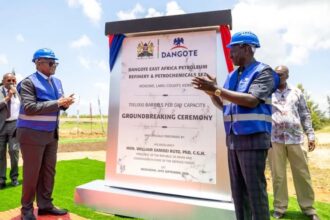
The President said discussions gained momentum after he met Dangote in Nairobi during the Africa We Build Summit. Ruto said he used the meeting to encourage the Nigerian businessman to consider investing in a refinery in Kenya. The engagement subsequently developed into negotiations that culminated in the launch of the project in Lamu. Construction of the refinery was officially launched on September 30, 2026, with the facility planned to process up to 700,000 barrels of crude oil per day.
Government Links Refinery to Jobs and Industrialisation
Ruto said the refinery is expected to generate employment and attract additional investments in industries connected to petroleum processing. Among the potential industries are petrochemical and plastics manufacturing, which could develop around the refinery and the planned Special Economic Zone.
The President said the project could therefore create opportunities beyond the refinery itself by encouraging businesses involved in manufacturing, logistics, services and other supporting sectors. Dangote Group has also said the project will create employment and skills-development opportunities, including plans for a technical training school for local residents.
Thousands of Acres Set Aside for Project
Ruto said the government has secured land for the refinery and is considering additional acreage for related industrial activities. He said about 10,000 acres had been secured, with the government seeking an additional 3,000 acres for the wider development, including a Special Economic Zone.
Land remains one of the contentious issues surrounding the project, with some Lamu residents challenging the use of parts of the land in court. The government has maintained that the main refinery site is on government land, while questions over land rights and compensation remain before the courts.
Refinery Expected to Boost Regional Energy Security
The planned refinery is intended to supply petroleum products to Kenya and other markets across East Africa, reducing dependence on imported refined fuels. The project is being presented by the government and Dangote Group as a major industrial investment that could strengthen regional energy security while supporting manufacturing, trade and employment.
The facility is expected to take about 40 months to complete once construction is fully underway and is designed to process 700,000 barrels of crude oil daily. Ruto has described the project as a major addition to Kenya’s industrial infrastructure, arguing that its impact could extend beyond petroleum processing to investment, manufacturing and economic activity in Lamu and the wider Coast region.
