



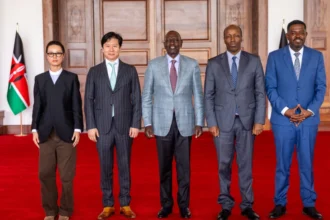


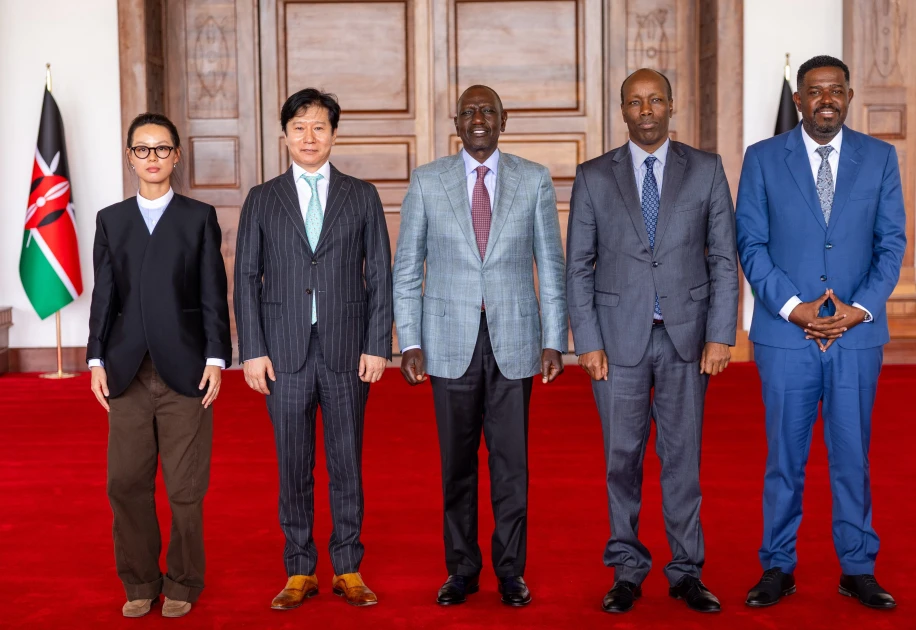
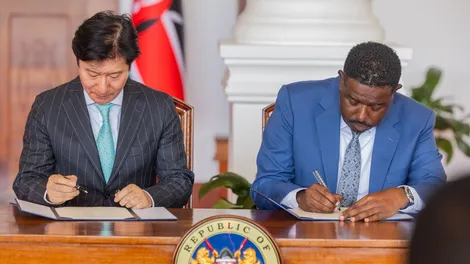
President William Ruto has witnessed the signing of a $3 billion (approximately Ksh.389.43 billion) Memorandum of Understanding (MoU) between the Kenyan Government and Endelevu Enterprise Corporation to establish an integrated electric vehicle manufacturing and green mobility ecosystem in Kenya. The agreement was signed on Tuesday at State House, Nairobi, as the government seeks to expand local vehicle manufacturing, attract investment and create employment opportunities.
The proposed project will cover the manufacturing and assembly of electric vehicles in Kenya, with the government positioning the investment as part of its broader industrialisation and clean-energy agenda.
Electric Vehicle Manufacturing Plants
Speaking after the signing, President Ruto said the investment would help Kenya shift from importing finished vehicles towards producing and adding value to products locally. He said the MoU provides a framework for what could become one of the largest electric mobility investments in the region. Under the proposal, an electric vehicle assembly plant will have the capacity to manufacture 50,000 four-wheel vehicles annually.
A separate facility is expected to produce up to 100,000 two-wheelers and light mobility vehicles each year. The project will also feature approximately 1,000 solar-powered charging hubs and a digital platform designed to manage a fleet of up to 100,000 green vehicles.
Thousands of Jobs Expected
President Ruto said the investment is expected to generate employment across different sectors of the economy. The project is projected to create around 2,000 direct jobs, with more than 20,000 additional indirect opportunities expected to emerge among suppliers, logistics companies and service providers.
The President added that the wider electric mobility ecosystem could create up to 80,000 further opportunities in areas such as fleet management, vehicle operations and related services. Ruto said the project would also support skills development, technology transfer and opportunities for small and medium-sized enterprises to participate in the emerging electric mobility value chain.
Ruto Pushes Local Value Addition
The President linked the investment to his broader call for Kenya to increase domestic value addition rather than exporting raw materials and importing finished goods. He said Kenya’s economic transformation would require more production, skills development and job creation within the country.
Ruto also linked the electric vehicle investment to the recently announced Dangote East African Refinery project in Lamu, describing both investments as part of Kenya’s wider industrialisation strategy. He said Kenya could continue developing petroleum refining capacity while simultaneously expanding electric mobility. According to the President, the two approaches are not contradictory, as Kenya still requires petroleum products while also preparing for a transition towards cleaner forms of transport.
Electric Vehicles and Energy Security
Ruto said greater adoption of electric vehicles could help reduce Kenya’s fuel import bill and ease pressure on the country’s foreign exchange reserves. He pointed to Kenya’s substantial renewable energy resources, including geothermal, wind, solar and hydropower, as an opportunity to power the transport sector using locally generated electricity.
The President argued that reliance on imported fuel leaves the economy exposed to fluctuations in global energy prices, while greater use of domestically generated electricity could provide additional stability. He attributed the growing interest in electric mobility investment to the government’s policy direction, including the launch of the National Electric Mobility Policy earlier this year.
Government Incentives for Electric Vehicles
Ruto said the government had introduced measures intended to encourage the adoption and manufacture of electric vehicles. Among the measures is a decision to allow the first 100,000 electric vehicles imported into Kenya to enter the country duty-free.
He also said the government had ordered 3,000 electric vehicles for security and administration officers as part of efforts to create demand for electric mobility. The President said the government had challenged manufacturers to establish production capacity locally, rather than simply importing vehicles into the Kenyan market.
Kenya Targets Regional EV Market
Ruto said Kenya’s electric vehicle ambitions extend beyond the domestic market. He told Endelevu Enterprise Corporation and its partner, Geely, that the country wants vehicles manufactured locally to serve markets across East Africa and the wider African continent.
Vehicles that meet the East African Community Rules of Origin would be eligible to access the regional market, potentially expanding the market available to manufacturers operating in Kenya. The President said the electric mobility programme would complement the National Automotive Bill currently before Parliament.
Government Asked to Fast-Track Approvals
Ruto directed the Ministry of Investment, Trade and Industry, through KenInvest, to support the investor in implementing the project. He also called on national and county government agencies to work together to facilitate approvals, land access and infrastructure within agreed timelines.
The President cautioned that signing the MoU was only the beginning of the process and called for a swift transition towards definitive agreements, construction and eventual production. He said the investor would ultimately be assessed based on the facilities and jobs delivered, while the government would be judged by how effectively it removes obstacles to implementation.
Government Welcomes Electric Vehicle Investment
Investment and Trade Cabinet Secretary Lee Kinyanjui said the agreement would support the government’s efforts to strengthen Kenya’s automotive industry and reduce dependence on imported petroleum products. He said President Ruto had placed greater emphasis on local vehicle assembly and manufacturing, particularly in the electric mobility sector.
Endelevu Enterprise Corporation Chairman Susong Tong described the agreement as another milestone for Kenya’s automotive industry. National Assembly Speaker Moses Wetang’ula, National Treasury Cabinet Secretary John Mbadi and Roads and Transport Cabinet Secretary Davis Chirchir were among the officials present during the signing ceremony.
