






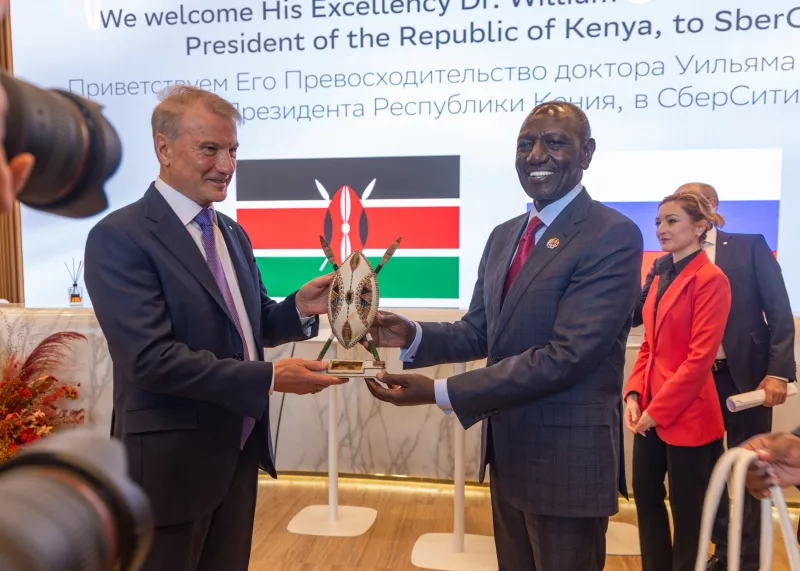
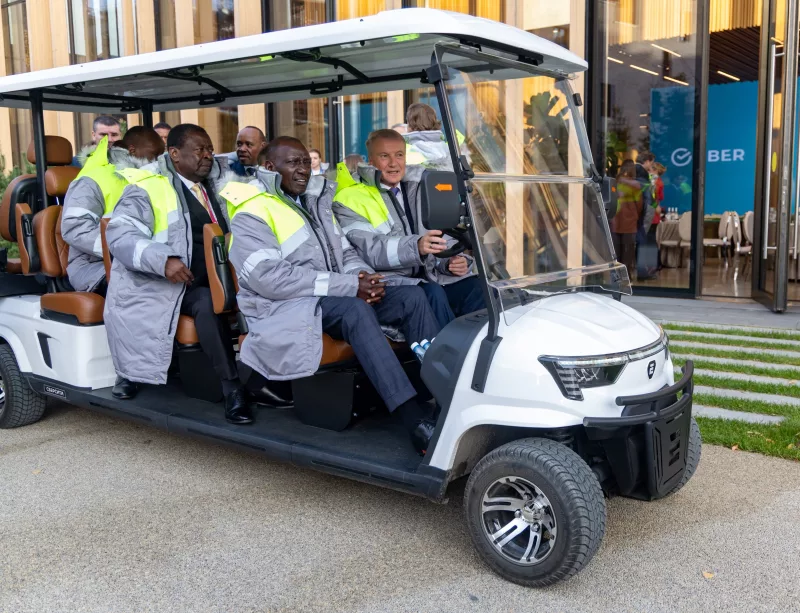
President William Ruto has expressed interest in borrowing ideas from Russia’s smart city development model as Kenya seeks new approaches to affordable housing, urban planning and technology-driven public services. Ruto made the remarks after touring a smart city project on the outskirts of Moscow during his visit to Russia for the third Russia-Africa Summit. He said the development demonstrated how technology, coordinated planning and sustainable infrastructure could be used to build modern communities.
The project, spearheaded by Sberbank Group, Russia’s largest financial conglomerate, occupies approximately 1,140 acres and features 65,000 housing units, office spaces, a hospital, schools and a waste management facility. According to the President, the development offers lessons that Kenya could consider as it works towards creating better living conditions and improving access to essential services.
Ruto Highlights Russia’s Integrated Urban Development Model
The President said the Moscow project demonstrated the importance of planning residential areas alongside the infrastructure and services residents need in their daily lives. Rather than developing housing independently, the model brings together homes, workplaces, healthcare facilities, schools and waste management systems within a coordinated urban environment.
Ruto noted that such an approach could help Kenya explore more effective ways of developing modern, sustainable and liveable communities. He said the project offered valuable insights into how technology could be incorporated into urban development and public service delivery. For Kenya, the approach could inform future housing projects by encouraging the development of residential areas supported by essential services, commercial facilities and reliable infrastructure.
Affordable Housing Programme in Focus
Ruto’s visit comes as his administration continues to pursue the Affordable Housing Programme, which aims to expand access to decent housing while creating employment and supporting economic growth. The programme forms part of the government’s broader development agenda, with the construction sector expected to contribute to job creation and increased economic activity. The President said Kenya could learn from Russia’s experience in combining residential housing with commercial facilities and public amenities while incorporating environmentally sustainable systems.
Adopting elements of the model could help inform the planning of future urban developments, particularly where housing needs to be supported by schools, hospitals, workplaces and other essential services. However, applying the approach in Kenya would require consideration of local housing needs, financing, infrastructure requirements, land use and the cost of maintaining the facilities.
Kenya Eyes AI Partnership with Sberbank Group
Beyond housing and urban planning, Ruto expressed interest in expanding cooperation between Kenya and Sberbank Group in artificial intelligence (AI), particularly in healthcare and education. The President said he was encouraged by the financial conglomerate’s willingness to explore partnerships that could help Kenya use emerging technologies to improve public service delivery. He noted that AI could offer opportunities to strengthen healthcare and education services while expanding access to quality services across the country.
In healthcare, properly implemented AI systems could help support administrative processes, organise information and improve the coordination of services. In education, digital technologies could widen access to learning materials and support the delivery of educational services. Ruto said Kenya was interested in harnessing such innovations to modernise public institutions and improve services for citizens. The potential partnership could therefore create an opportunity for further discussions on how Russian technological expertise might support Kenya’s development priorities.
Technology and Sustainability in Modern Cities
The Moscow development combines housing, commercial facilities, public amenities and waste management infrastructure, highlighting the role of coordinated planning in modern urban development. Smart city approaches generally use technology and data to support the management of infrastructure and services. Depending on how they are implemented, these systems can help improve coordination, resource management and service delivery.
For Kenya, exploring such approaches could complement existing efforts to improve housing and urban infrastructure. However, successful implementation would require appropriate investment, reliable digital infrastructure, skilled personnel and safeguards for personal data and cybersecurity. The government would also need to assess the costs and long-term benefits of any proposed technology before adopting it on a wider scale.
Ruto Seeks Stronger Kenya-Russia Cooperation
Ruto’s engagement with Sberbank Group forms part of Kenya’s broader efforts to strengthen international partnerships and identify opportunities in technology, investment and development. The discussions could provide a basis for exploring cooperation in smart city planning, digital public services, healthcare technology and education. Such collaboration would need to be developed further to establish specific projects, funding arrangements, implementation timelines and the responsibilities of the parties involved.
The extent of any potential cooperation had not been specified at the time of the announcement. For Kenya, the key consideration will be how lessons from Russia’s smart city model can be adapted to local conditions and translated into practical improvements in housing, urban infrastructure and public service delivery.
