






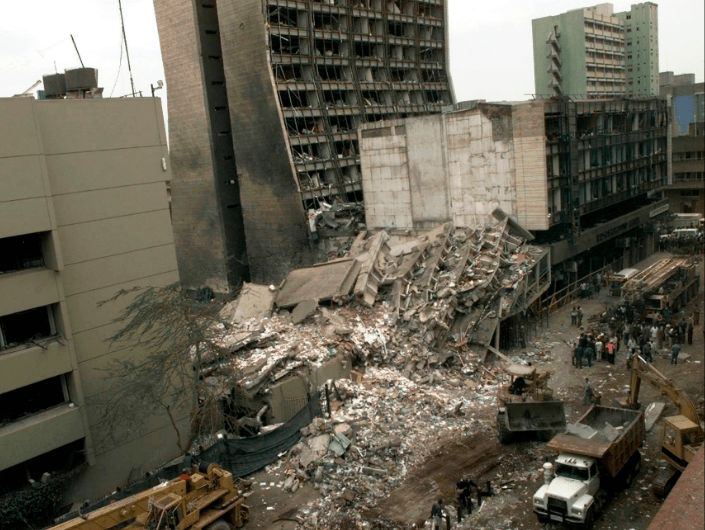
The High Court has dismissed a petition filed by victims and families affected by the 1998 bomb blast, who were seeking compensation from the government, ruling that the case did not meet the required legal threshold. In its judgment, the court found that the petitioners failed to demonstrate that the government had prior intelligence or advance knowledge of the attack and subsequently failed to act to prevent it. The judge noted that although the petitioners relied on several reports to support their claims, none of the authors of those documents appeared in court to verify their contents. As a result, the court ruled that the reports amounted to hearsay and could not be relied upon as credible evidence.
The court further observed that there was no evidence indicating that the United States government blamed Kenyan authorities for failing to avert the bombing. Emphasizing the legal standard required in such cases, the judge stated that the burden of proof rested entirely on the petitioners. They were required to show that actionable intelligence existed and that the government failed to act despite being aware of it. The court found that this burden had not been discharged.
The petitioners had argued that the state failed in its constitutional obligation to protect citizens and prevent the attack. They also told the court that they had suffered immense loss, injuries, and long-term trauma as a result of the bombing and had not received sufficient compensation, prompting them to seek redress through the courts. However, the court concluded that while the suffering of the victims is deeply acknowledged, sympathy alone cannot replace the need for admissible and credible evidence to establish state liability. On that basis, the petition was dismissed.
