




While Nairobi may not yet rival global financial centres like London, New York City, or Singapore, it continues to gain recognition as a fast-growing investment destination. With a strategic location and expanding sectors such as technology, finance, real estate, and infrastructure, the Kenyan capital is steadily rising as a key player in Africa’s economic landscape.
A report by Knight Frank underscores Nairobi’s strong performance in real estate, highlighting steady growth in both commercial and residential markets. However, long-standing challenges, including traffic congestion, flooding, overcrowding, and urban disorder, have continued to affect the city’s efficiency. Even light rainfall can disrupt movement, bringing large sections of the capital to a halt.
That may soon change with the ambitious Nairobi Railway City (NRC), a transformative project aimed at redefining the Central Business District into a modern, integrated hub for business, transport, and residential living.
A Vision Years in the Making
The project has been under development for over six years. It gained momentum following a 2020 meeting between former President Uhuru Kenyatta and former UK Prime Minister Boris Johnson during the UK-Africa Investment Summit.
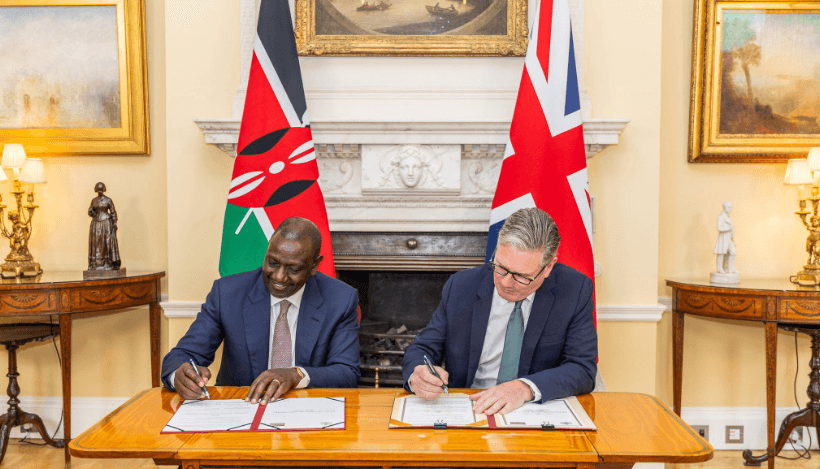
Since then, the UK government has supported Kenyan authorities with technical expertise, including master planning, feasibility studies, engineering design, and cost analysis. More recently, President William Ruto discussed progress on the project with UK Prime Minister Keir Starmer during a meeting in London, following Cabinet approval. According to President Ruto, the NRC is expected to boost economic growth, create jobs, and significantly improve mobility across the Nairobi Metropolitan area.
Implementation and Scope
Kenya Railways Corporation Managing Director Philip Mainga has confirmed that preparations are complete and construction is set to begin, with the Sh30 billion project moving forward after resolving earlier procurement concerns.
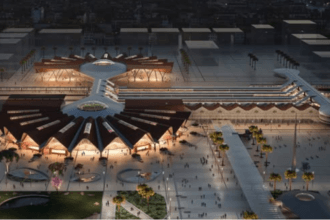
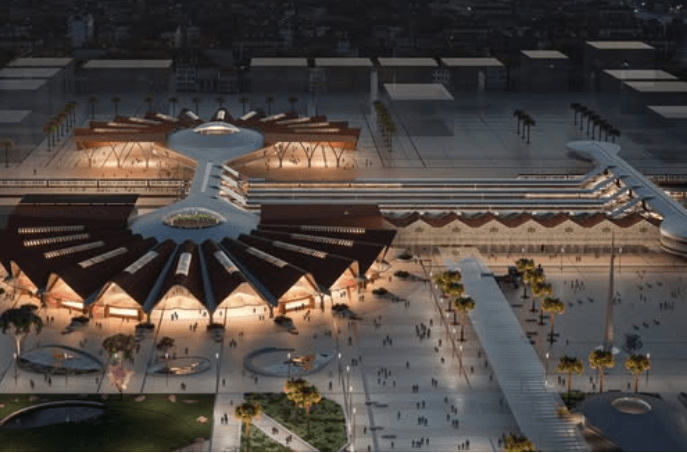
Spanning 438 acres next to the CBD, the NRC aims to revitalise underutilised railway land into a sustainable, transit-oriented urban centre. The development aligns with Kenya’s Vision 2030 and broader urban and transport strategies. At its core is the модерниsed Nairobi Central Railway Station, which is expected to handle up to 400,000 passengers daily by 2030, increasing to 600,000 by 2045.
Key Features and Benefits
The NRC is designed to tackle congestion while promoting economic and social growth. It is expected to create around 5,000 jobs during construction and an additional 5,000 in its early operational phase.
A major highlight is its integrated transport system, combining commuter rail, Bus Rapid Transit (BRT), Light Rail Transit (LRT), public service vehicles, and pedestrian-friendly infrastructure. The project also prioritises sustainability through green spaces, low-carbon buildings, and climate-resilient infrastructure.
Six Distinct Precincts
The development will be divided into six specialised zones:
- MICE Core: A hub for conferences, exhibitions, offices, hotels, and retail spaces
- Central Station Back: A commercial area designed to stimulate economic activity
- Sustainable Housing: Delivery of 10,000 affordable housing units with community facilities
- West Core: A centre for culture, research, and innovation
- Central Station Front: A multi-modal transport and business zone
- Market Core: A socially inclusive marketplace supporting local trade and heritage
Housing and Infrastructure Expansion
The NRC will deliver 10,000 housing units catering to low-, middle-, and high-income residents. It will also include student accommodation for approximately 2,500 learners and dedicated housing for young professionals.
Additionally, a government precinct will provide 500,000 square feet of office space for ministries, agencies, SMEs, NGOs, and corporate organisations. Transport infrastructure will be further enhanced by BRT lines, including the 80km Line 3 (Tala–Dandora–KNH–Ngong) and the 30.8km Line 4 (Mama Lucy Hospital to Kikuyu via the CBD).
Funding and Timeline
Funding for the central station and public infrastructure is being supported through a partnership with UK Export Finance, alongside contributions from global institutions such as the World Bank Group, European Investment Bank, African Development Bank, Agence Française de Développement, and Japan International Cooperation Agency.
The Kenyan government has already committed Sh12.3 billion for preparatory works, with additional allocations of Sh91 billion for rail upgrades and Sh117 billion for BRT development. The new Central Station, the project’s flagship, is expected to be completed by July 2027.
A New Chapter for Nairobi
Once complete, the Nairobi Railway City is expected to redefine urban living in the capital—easing congestion, improving transport, creating jobs, and positioning Nairobi as a modern, globally competitive city.
