








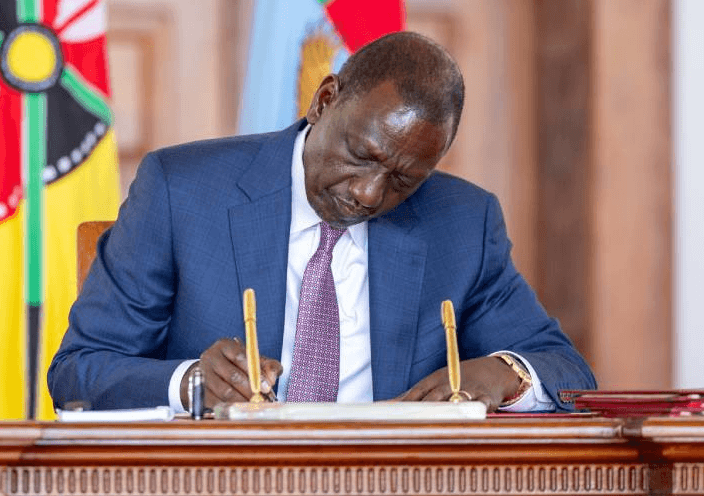
William Ruto has officially signed into law the Sh5 trillion National Infrastructure Bill, a landmark piece of legislation aimed at accelerating the development of key national projects. The new law is expected to unlock funding and streamline approvals for large-scale infrastructure works across the country, including the long-awaited expansion of Jomo Kenyatta International Airport. The move signals the government’s renewed push to modernize transport networks, boost economic growth, and strengthen Kenya’s position as a regional logistics hub.
What the New Law Means
The National Infrastructure Bill establishes a legal and financial framework to facilitate the planning, funding, and implementation of strategic infrastructure projects. By simplifying bureaucratic procedures and creating clearer investment guidelines, the law is designed to fast-track projects that have previously faced delays. The legislation also introduces mechanisms that will allow the government to partner more effectively with private investors through Public-Private Partnerships (PPPs), helping mobilize additional capital for large-scale development.
Expansion of JKIA
One of the most significant projects expected to benefit from the new law is the expansion of Jomo Kenyatta International Airport in Nairobi. The airport, which serves as East Africa’s primary aviation gateway, has been operating under increasing pressure due to growing passenger numbers and cargo traffic. The planned expansion aims to:
- Increase passenger handling capacity
- Upgrade cargo facilities
- Improve terminal infrastructure
- Strengthen Kenya’s position as a regional aviation hub
Officials say the expansion will support tourism, trade, and international connectivity while improving passenger experience.
Boost for National Development
Beyond aviation, the new law will support a wide range of infrastructure projects across the country. These include developments in:
- Transport and logistics corridors
- Energy and power generation
- Water supply systems
- Digital and telecommunications infrastructure
According to government officials, the goal is to create a coordinated national development framework that ensures projects are implemented faster and more efficiently.
Economic Impact
Experts believe the Sh5 trillion infrastructure plan could significantly stimulate Kenya’s economy by creating thousands of jobs and attracting both local and foreign investment. Improved infrastructure is also expected to reduce transportation costs, enhance trade competitiveness, and support regional integration within East Africa. By investing heavily in strategic infrastructure, the government hopes to drive long-term economic transformation and position Kenya as a key gateway for commerce in Africa.
Conclusion
The signing of the National Infrastructure Bill marks a major step in Kenya’s development agenda. With the expansion of Jomo Kenyatta International Airport and other strategic projects now set to move forward, the government is banking on infrastructure to fuel economic growth and improve service delivery across the country.
