




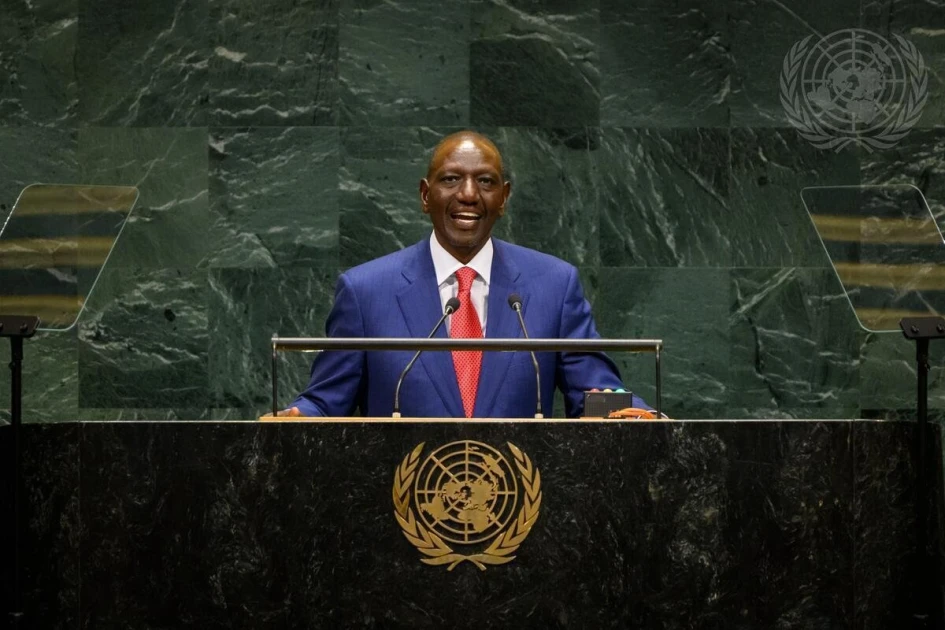
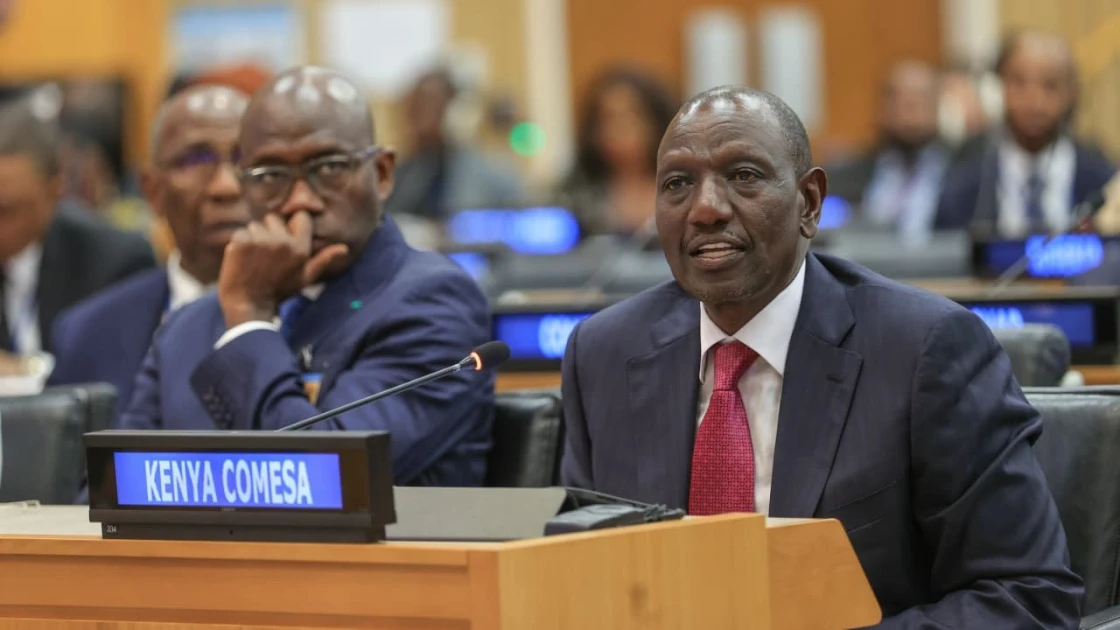
President William Ruto has renewed calls for major reforms at the United Nations, arguing that the current structure of the Security Council does not adequately reflect the modern global order. Addressing the 81st United Nations General Assembly in New York on September 23, 2026, Ruto called for Africa to be granted equitable and permanent representation on the Security Council, including the privileges attached to permanent membership.
The Security Council currently has 15 members, comprising five permanent members—China, France, Russia, the United Kingdom and the United States—and 10 non-permanent members elected for two-year terms. The five permanent members hold veto powers.
Ruto argued that the exclusion of Africa from permanent membership was inconsistent with the principle of sovereign equality among UN member states. He noted that the continent has 54 UN member states but remains without a permanent seat on the Council.
Ruto Challenges Existing UN Structure
The President said the international system should evolve to reflect changes that have taken place since the United Nations was established. He pointed to the 1945 San Francisco conference, noting that only four African countries were represented while much of the continent remained under colonial rule.
Ruto said Africa should no longer remain largely on the receiving end of decisions made by institutions in which it lacks permanent representation. He also referred to commitments made by UN member states through the Pact for the Future to address historical injustices affecting Africa as part of Security Council reform. The call for greater African representation is also reflected in ongoing UN discussions. The President of the 81st General Assembly has said Africa remains underrepresented despite being the largest regional group by number of member states and a major focus of UN peacekeeping efforts.
Calls for Fairer Global Financing
Beyond political reforms, Ruto called for changes to the international financial system to make development financing more accessible to developing countries. He argued that high debt-servicing costs continue to place pressure on developing nations, limiting their ability to invest in education, healthcare and other public services.
The President called for multilateral development banks to increase lending and make greater use of guarantees, risk-sharing mechanisms, long-term financing and local-currency lending to reduce the cost of investment. At the same time, he said developing countries must strengthen their own institutions, manage public debt responsibly, deepen domestic capital markets, honour contracts and address corruption. Ruto said international reforms should therefore be accompanied by greater accountability at the national level.
Ruto Links Peace to Development
The President further argued that global security and economic development cannot be treated as separate issues. He warned that failures in conflict prevention and peacebuilding have direct consequences for civilians, particularly children and families affected by displacement, disrupted education and collapsing public services. Ruto said a reformed United Nations should be capable of responding more effectively to conflicts while supporting sustainable development.
Kenya’s Lamu Refinery Project
During his address, Ruto also highlighted Kenya’s planned East Africa Refinery in Lamu as an example of the continent’s potential to add value to its natural resources. He said Kenya expected to break ground on the project, which is projected to have a processing capacity of 700,000 barrels of oil per day and an estimated investment of about $16 billion.
The project is being advanced with the involvement of Dangote Industries and the Africa Finance Corporation, with Kenyan officials presenting it as a major industrial and energy investment. Ruto said projects of this nature could help African countries create jobs, expand industries and increase the value derived from their resources rather than exporting raw materials.
‘Africa Does Not Come to Plead’
Ruto said Africa should approach global institutions not only with demands for reform but also with proposals and resources that can contribute to global growth. He cited Africa’s mineral resources, agricultural potential, renewable energy capacity, growing population and large consumer market as assets that could support greater economic participation.
The President also pointed to the history of UN reform, noting that the Security Council was expanded from 11 to 15 members in 1963 after member states recognised the need for the institution to respond to a changing international landscape. He argued that the same principle could be applied to further reform the Council. Ruto’s address therefore placed UN Security Council reform, fairer international financing and Africa’s economic transformation at the centre of Kenya’s message to the 81st General Assembly.
