







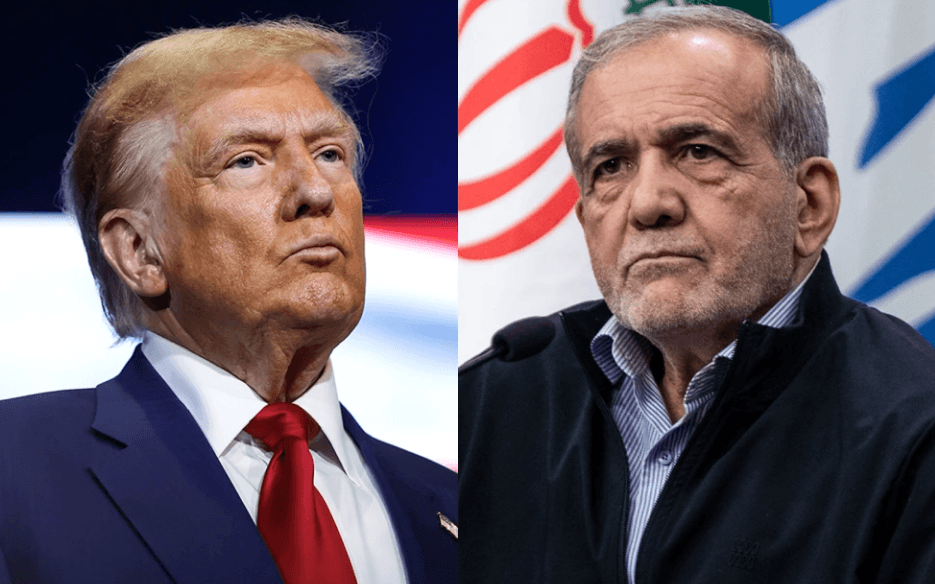

US President Donald Trump and Iranian President Masoud Pezeshkian have signed a landmark agreement aimed at ending hostilities between Washington and Tehran and establishing a ceasefire framework between the two countries. The deal, described by officials as a Memorandum of Understanding (MoU), is expected to de-escalate long-standing tensions and open the door to further negotiations on broader peace and security arrangements. According to diplomatic updates, the agreement includes provisions to halt military confrontations, stabilize key maritime routes, and gradually ease economic restrictions depending on compliance with the outlined terms.
The signing of the deal marks a significant diplomatic breakthrough after months of rising tensions between the two nations. Both sides are expected to engage in follow-up technical talks to finalize implementation details, including security guarantees and sanctions-related measures. While the agreement is being framed as an important step toward peace, analysts caution that it remains a preliminary framework that still requires extensive negotiations before becoming a full treaty.
The US–Iran deal has immediate implications for global energy and financial markets, particularly due to Iran’s role in global oil supply chains and strategic shipping routes such as the Strait of Hormuz. Any easing of tensions in the Middle East typically leads to improved investor confidence, stabilization of oil prices, and reduced risk premiums on global trade routes.
Although Kenya is geographically distant from the conflict, the agreement could have important indirect effects on its economy:
Stabilization of Fuel Prices
Kenya is a net importer of petroleum products. A reduction in Middle East tensions could ease global oil prices, helping stabilize domestic fuel costs and reduce inflationary pressure.
Reduced Inflationary Pressure
Fuel prices directly affect transportation, manufacturing, and food distribution in Kenya. Lower global oil volatility could help ease the cost of living and stabilize inflation.
Strengthening of the Kenyan Shilling
Improved global investor sentiment often supports emerging market currencies, including the Kenyan shilling, by reducing risk aversion in global financial markets.
Boost to Trade and Imports
Lower shipping risks through key global trade routes can improve supply chain efficiency, potentially reducing the cost of imported goods into Kenya. However, economists note that Kenya’s economic performance will still largely depend on domestic fiscal policies, taxation, and structural reforms rather than international diplomacy alone.
Despite the breakthrough, both Washington and Tehran have indicated that the agreement remains fragile and subject to further negotiation. Key issues such as sanctions relief, nuclear oversight, and regional security arrangements are still under discussion. The coming weeks are expected to be critical as technical teams work toward converting the memorandum into a more comprehensive and binding peace agreement. For now, global markets—and economies like Kenya’s will be watching closely for signs of stability in one of the world’s most sensitive geopolitical regions.
