






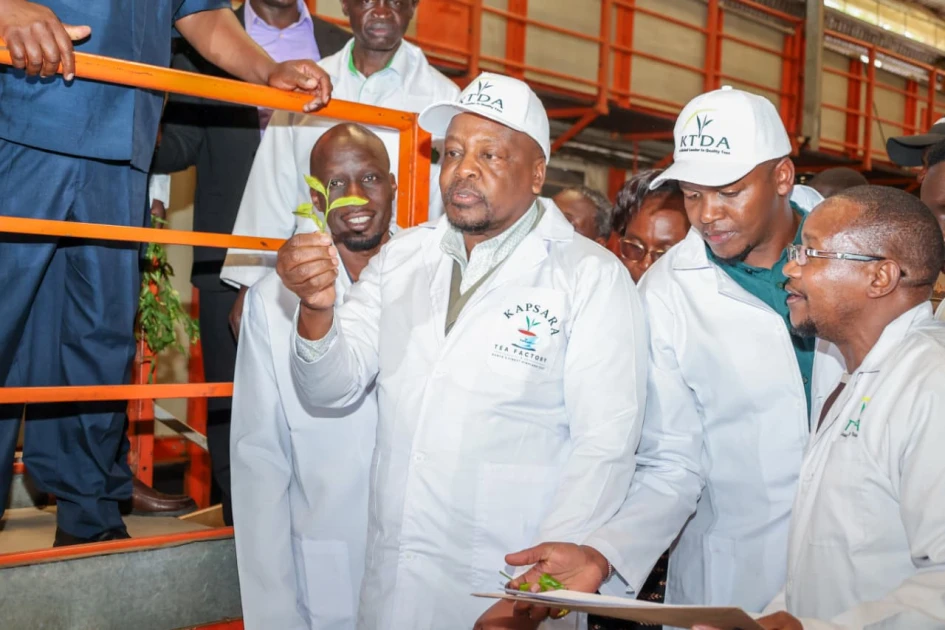

Agriculture and Livestock Development Cabinet Secretary Mutahi Kagwe has directed tea factories to reject green leaf that fails to meet the required quality standards, saying improved machinery must be matched by better produce from farmers. Speaking at Kapsara Tea Factory in Trans Nzoia County, Kagwe said Kenya cannot invest heavily in modernising tea factories while allowing low-quality green leaf to enter the production process. He said farmers should adhere to the recommended “two leaves and a bud” standard to ensure the country produces high-quality tea capable of attracting better prices in international markets.
Kagwe Pushes for Higher Tea Quality
The CS said factories need to enforce stricter quality controls when receiving green leaf to ensure farmers who meet the required standards are not disadvantaged by poor-quality produce from others. Kagwe explained that better plucking practices lead to higher-quality green leaf, which produces premium tea that can command better prices. Higher earnings from exports, he noted, would ultimately translate into improved payments and bonuses for farmers.
He said the government wants to create a stronger growth cycle in the tea sector by improving quality, expanding exports and securing more profitable international markets.
Ksh.7.1 Billion Factory Modernisation Programme
Kagwe said the government is implementing a Ksh.7.1 billion tea factory modernisation programme aimed at replacing outdated machinery and improving the efficiency of processing facilities. At Kapsara Tea Factory, more than Ksh.44.6 million has been allocated for the installation of a modern withering plant to replace ageing equipment that consumes high amounts of electricity.
The wider modernisation programme is expected to reduce energy and processing costs while enabling factories to produce higher-value tea products. However, Kagwe stressed that modern equipment alone cannot solve challenges facing the industry unless farmers, factory managers, government agencies and other players work together to maintain high standards.
Government Seeks New Tea Markets
Kenya remains a major tea exporter but continues to depend heavily on a limited number of international markets. Kagwe said the government is therefore working to identify additional buyers while strengthening existing markets. The strategy will also focus on increasing the production of orthodox, specialty and value-added teas, which can attract higher returns.
He said diversifying export destinations would help shield the industry from disruptions in individual markets and create more opportunities for Kenyan tea.
Tea Levy Expected to Support Farmers
Kagwe also highlighted the role of the newly introduced Tea Levy in strengthening the tea industry and improving long-term returns to growers. Funds raised through the levy are expected to support areas such as farmer price stabilisation, tea research, infrastructure, marketing, promotion, quality improvement, value addition and the development of new markets.
The government says the measures form part of President William Ruto’s broader plan to transform agriculture into a stronger source of income and wealth for Kenyan households.
