






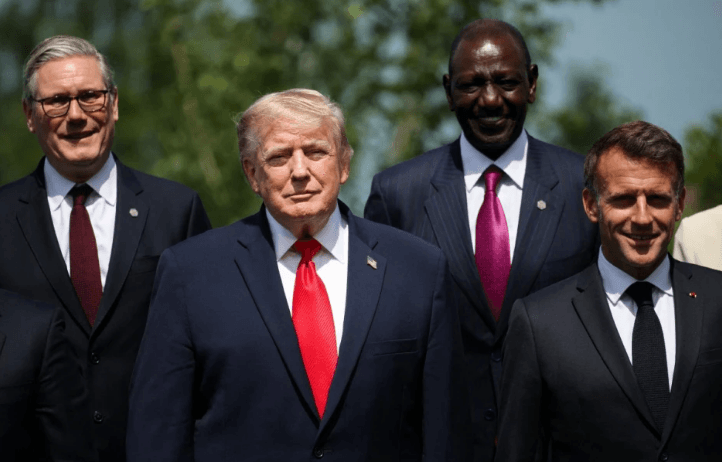
Leaders of the Group of Seven (G7) nations have emerged from their latest summit with a renewed commitment to intensify pressure on Russia over its ongoing war in Ukraine, signaling a stronger and more coordinated international response. The three-day summit, attended by leaders from the United States, Canada, Britain, France, Germany, Italy, and Japan, focused heavily on the conflict in Ukraine, sanctions against Russia, and broader global security concerns. A key outcome of the meeting was a joint agreement to strengthen economic pressure on Moscow by targeting sectors that help finance Russia’s military operations, including revenues generated from fossil fuel exports.
The G7 leaders reaffirmed their support for Ukraine, pledging to enhance the country’s air defense capabilities and expand military cooperation. According to diplomatic sources, member states also agreed to support the licensing of Ukrainian companies to manufacture long-range missile systems and air defense equipment domestically, a move aimed at boosting Ukraine’s defense capacity. Ukrainian President Volodymyr Zelensky attended the summit and held discussions with participating leaders on continued international support.
Several European leaders noted what they described as a change in tone from US President Donald Trump regarding Russia and the war in Ukraine. French President Emmanuel Macron said there appeared to be a growing recognition within the US administration that Russia was not currently showing genuine interest in negotiating peace.
German Chancellor Friedrich Merz welcomed the summit’s final declaration, describing it as a significant diplomatic achievement after intensive negotiations among member nations. Canadian Prime Minister Mark Carney also pointed to a noticeable shift in Washington’s approach toward the conflict.
Beyond geopolitical issues, G7 leaders dedicated part of the summit to discussions on artificial intelligence and online safety. The meeting brought together several leading figures in the AI industry, including executives from OpenAI, Anthropic, DeepMind, and Mistral AI.
Leaders called on technology companies to develop safer digital environments, particularly for children and young users, while emphasizing the importance of responsible AI development. Macron stressed the need for stronger international cooperation and regulation to ensure emerging technologies are used safely and ethically.
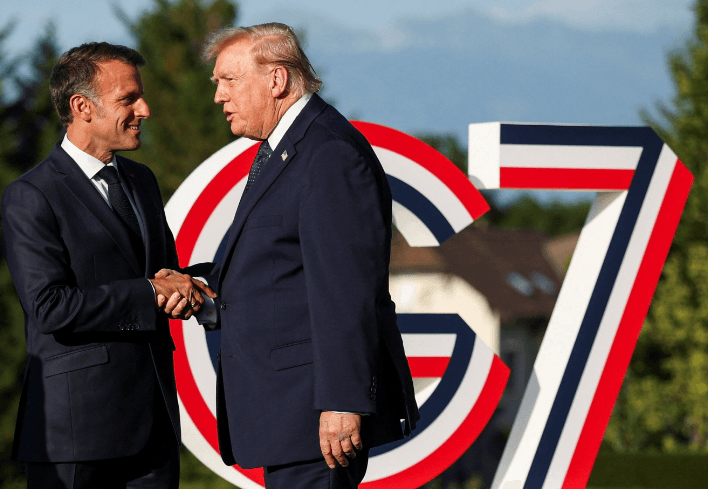
President Trump remained one of the most closely watched figures throughout the gathering. Unlike previous summits where he departed early, he participated through the event’s conclusion and endorsed the final communiqué. Following the summit, Trump accepted an invitation from Macron to attend a dinner at the Palace of Versailles near Paris, underscoring the diplomatic engagement between the two leaders. Trump also addressed the situation in Iran, warning that military action could resume if Tehran fails to comply with the terms of a recently negotiated agreement.
The summit highlighted growing cooperation among G7 nations on major international challenges, including the war in Ukraine, tensions in the Middle East, cybersecurity, and the governance of artificial intelligence. As the conflict in Ukraine continues and global security concerns evolve, the leaders signaled their intention to maintain coordinated pressure on Russia while supporting efforts aimed at achieving lasting peace and stability.
