





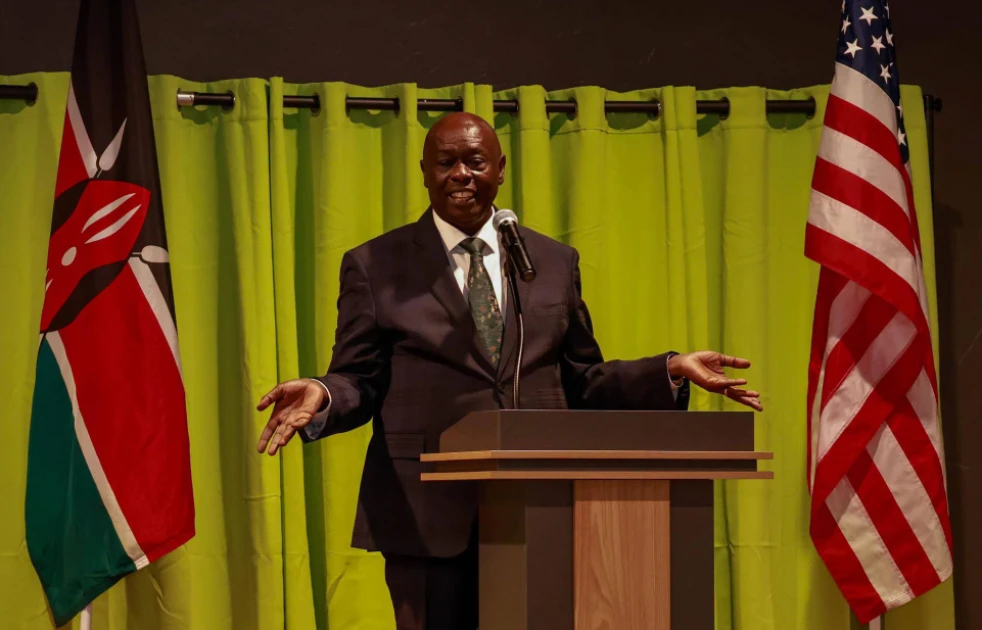
Democracy for the Citizens Party (DCP) leader Rigathi Gachagua has accused President William Ruto of seeking to facilitate the exploitation of niobium and rare-earth deposits at Mrima Hills in Kwale County by foreign companies. Gachagua made the allegations while addressing Kenyans in Kansas City during his ongoing tour of the United States, where he has been engaging the Kenyan diaspora on national political and economic issues.
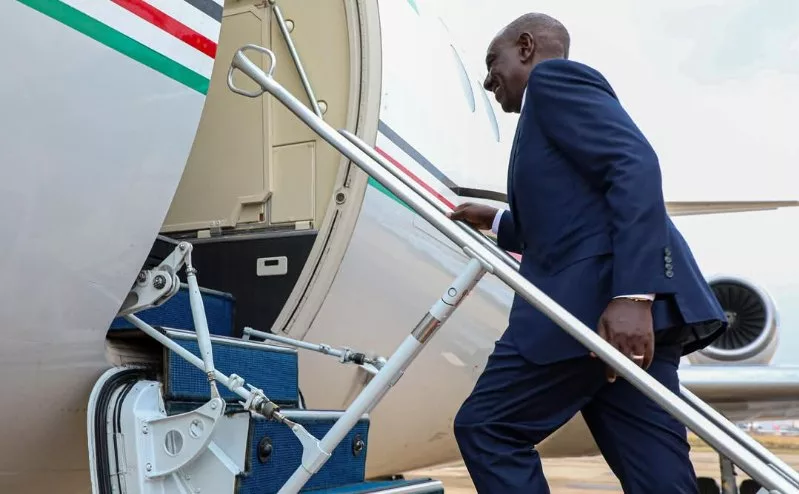
According to Gachagua, the mineral deposits at Mrima Hills have enormous economic value and should be protected for the benefit of Kenyans, particularly residents of Kwale County who, he argued, continue to experience poverty despite living in an area endowed with valuable natural resources. The former Deputy President alleged that President Ruto’s visit to New York for the 81st United Nations General Assembly (UNGA) was not limited to his official engagements at the international forum.
Gachagua claimed that the President’s trip also involved efforts to advance contractual arrangements with American companies interested in exploiting the mineral deposits at Mrima Hills. He further alleged that President Ruto stood to benefit directly from the proposed mineral deal and described the President’s UNGA engagements as a cover for negotiations over the deposits. The allegations, however, have not been independently established.
Government Plans Tender for Mrima Hill Minerals
Government documents provide important context to the claims. The Ministry of Mining, Blue Economy and Maritime Affairs has officially identified Mrima Hills in Kwale County as an area to be awarded through a tender process for large-scale mining operations. The designated area covers approximately 31.93 square kilometres and includes niobium and rare-earth minerals.
The Ministry’s terms of reference state that the government intends to commercialise the deposits by awarding mineral rights through a public tender, in accordance with the Mining Act and the Mining (Award of Mineral Rights by Tender) Regulations. The government document also says that the successful project developer would initially receive a prospecting licence and would be required to comply with Kenya’s mining laws and regulations.
The Ministry invited qualified mining operators with experience in niobium and rare-earth exploration, adequate financial capacity and technical expertise to express interest in the project. The requirements also include commitments to environmental protection, community engagement, local processing and beneficiation of the minerals.
What is Known About the Mineral Deposits?
Mrima Hill has been known as a mineral prospect for decades. According to the Ministry, exploration activities were undertaken as far back as the 1930s, while further exploration was conducted in collaboration with Anglo American Corporation in the 1950s. Recent government geological work confirmed the presence of several minerals, including niobium, yttrium, thorium, strontium and lanthanum.
The Ministry’s estimates indicate 5.8 million tonnes of indicated niobium resources at a grade of 1.41% Nb₂O₅, alongside 17.5 million tonnes of inferred resources at the same grade. The project also contains significant estimated rare-earth resources. The government describes niobium and rare-earth elements as strategic minerals because of their applications in industries including high-strength materials, electronics, construction and other advanced technologies.
US Interest in Kenya’s Critical Minerals
Gachagua’s allegations come at a time when international interest in Kenya’s strategic minerals has increased. Reuters reported earlier this month that the United States had expressed willingness to support Kenya in developing local processing of strategic minerals. The report said Kenya was examining potential investors for the Mrima Hill deposit.
The report also indicated that US-based Critical Metals Corp and Australia’s RareX had been shortlisted to compete for rights to develop Mrima Hill, although the Kenyan government had not publicly released the full list of shortlisted companies.
President Ruto has previously spoken about accelerating the responsible exploration and development of Kenya’s critical minerals, including niobium and rare-earth elements.
Gachagua Links Issue to 2027 Politics
Beyond the mineral controversy, Gachagua used his engagements in the United States to discuss the 2027 General Election and the future of Kenya’s opposition. The DCP leader told Kenyans living in America that he remained committed to efforts aimed at bringing opposition leaders together ahead of the elections. He also claimed that attempts by the Ruto administration to create divisions within the opposition had not succeeded.
Gachagua’s US tour therefore combines economic and political messaging, with the DCP leader using his engagements with Kenyans abroad to raise concerns over natural-resource management while also advocating for opposition cooperation ahead of the 2027 polls
