






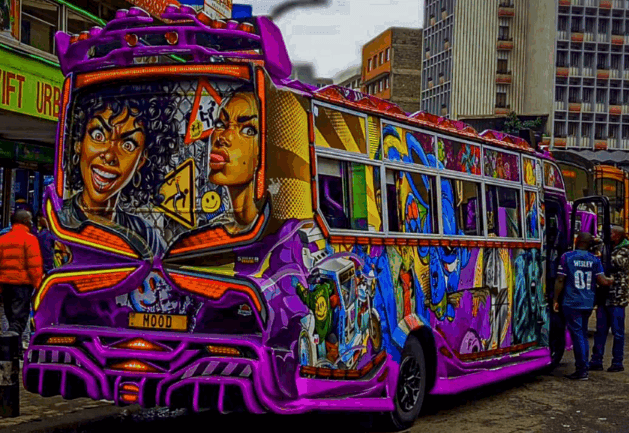
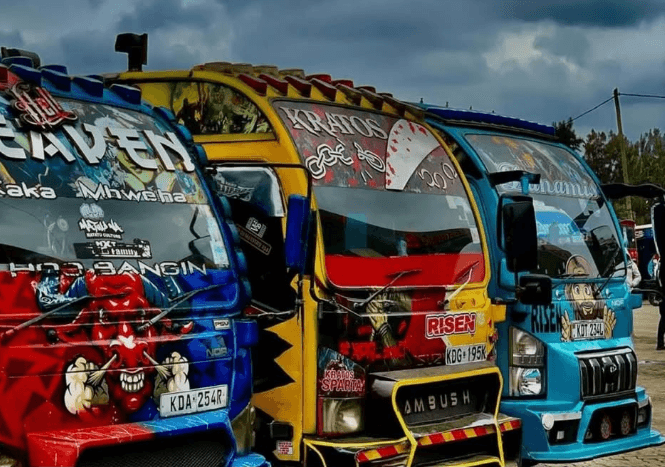
President William Ruto has directed the National Transport and Safety Authority (NTSA) to allow matatu operators to continue using graffiti art on their vehicles, as long as it is done responsibly. The move signals a recognition of the unique role that graffiti plays in Kenya’s vibrant public transport culture.
For years, matatus, particularly in Nairobi, have been known for their bold designs, colorful artwork, and creative expressions that often reflect music, pop culture, and social trends. While this culture has been widely celebrated by the youth, it has at times drawn criticism from regulators concerned about safety, obscenity, and distraction on the roads.
Under the President’s directive, the emphasis now shifts to regulation rather than restriction. Operators will still be allowed to showcase their creativity, but within clear guidelines aimed at ensuring public decency, road safety, and professionalism in the transport sector. This balanced approach is seen as a win for both the creative industry and the transport sector. Graffiti artists, many of whom rely on matatu branding for income, are likely to benefit from the continued demand for their work. At the same time, authorities will have the mandate to curb excesses that may compromise safety or violate standards.
Industry players have welcomed the directive, noting that matatu graffiti is not just decoration but a cultural identity and a source of employment for many young people. However, they also acknowledge the need for self-regulation to maintain order and avoid clashes with authorities. As NTSA works on implementing the directive, stakeholders will be watching closely to see how the balance between creativity and compliance is achieved. If successful, the policy could serve as a model for preserving cultural expression while upholding regulatory standards.
