







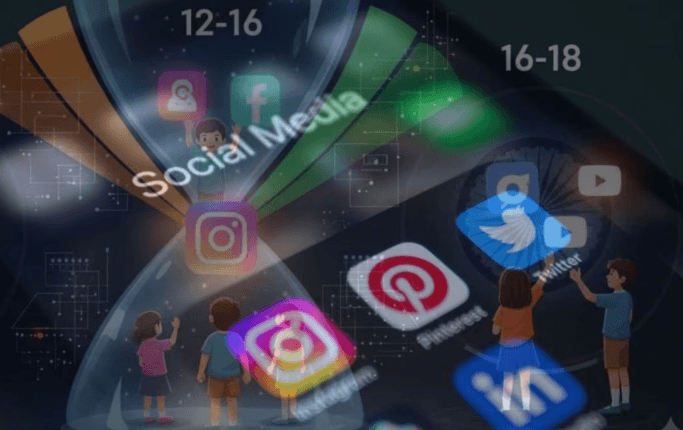

The United Kingdom is set to introduce a sweeping ban on social media use for children under the age of 16, Prime Minister Keir Starmer announced on Monday, citing growing concerns over the impact of digital platforms on young people.
Starmer said the government plans to prohibit access to major social media platforms for minors, arguing that such services expose children to harmful content and are deliberately designed to be addictive. Platforms expected to be affected include TikTok, Snapchat, Instagram, Facebook, YouTube and X, although messaging services like WhatsApp will be exempt. The government aims to pass the new regulations by December, with implementation expected in the spring of next year.
Beyond the social media ban, the UK government is also exploring stricter measures targeting gaming and live streaming platforms, particularly those that allow interactions between children and unknown adults. Officials are considering additional safeguards, including overnight usage restrictions and limits on features such as infinite scrolling for users under 18. More details on these proposals are expected to be released in July.
The move follows a nationwide consultation exercise that drew approximately 116,000 responses, making it one of the largest in the country’s history. According to the findings, more than 80 percent of parents believe the risks of social media outweigh its benefits, while over 90 percent support setting the minimum age at 16. Starmer noted that the policy has been influenced by international trends, including Australia’s recent decision to implement a similar ban. Other countries, such as Canada and Indonesia, are also advancing legislation aimed at restricting children’s access to social media platforms.
The UK government has further warned technology companies that they must introduce stronger protections to prevent children from sending or receiving explicit content. Firms such as Apple and Google have been given a three-month deadline to implement safety features on their devices or face regulatory action.
Authorities say these steps are part of a broader effort to curb online abuse, exploitation, and harmful interactions involving minors. The government emphasized that technology companies have a moral obligation to protect young users from coercion, exploitation, and sextortion.
New legal measures are also expected to restrict children’s access to pornographic content and make it harder for offenders to target minors online. According to data cited by the government, a significant proportion of online child abuse material reported in 2024 involved self-generated content by minors, highlighting the urgent need for stronger safeguards.
While the proposals have received support from many parents and policymakers, some industry players have raised concerns that a blanket ban could push children toward less regulated and potentially more dangerous platforms. The UK government maintains that the planned reforms are necessary to create a safer digital environment for children and to address the growing risks posed by online platforms.
