







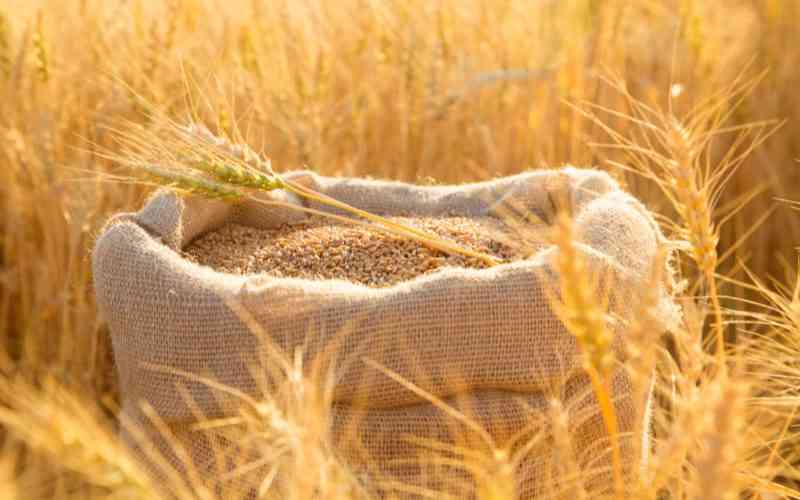

The government has increased the producer price of wheat to Ksh. 5,100 per 90kg bag for the 2026 season, up from Ksh. 4,750 last year. The move is aimed at improving farmer incomes while maintaining a steady supply of wheat in the market.
In a statement, Agriculture Cabinet Secretary Mutahi Kagwe said the new pricing structure seeks to balance farmers’ profitability with affordability for consumers. The decision was reached after consultations coordinated by the Agriculture and Food Authority (AFA), involving key stakeholders such as wheat farmers, millers, and the Cereal Growers Association.
The agreed price will apply at designated collection centres where the government has already begun purchasing locally produced wheat before allowing imports. This approach is meant to support local farmers and reduce reliance on foreign supply.
Production Forecasts
Wheat output this season is projected at حوالي one million 90kg bags, a drop from approximately 1.7 million bags recorded last year.
The decline has been linked to:
- Unfavourable weather conditions
- Farmers shifting to barley farming due to previously higher returns
Barley had attracted more farmers last season after fetching around Ksh. 5,300 per bag. However, prices have since dropped to between Ksh. 4,200 and Ksh. 4,500, making wheat farming more appealing again.
Over 2,000 farmers from key wheat-growing regions—including Narok, Nakuru, Meru, Laikipia, Nyandarua, and Uasin Gishu—are expected to benefit from the revised prices.
Measures to Boost Local Production
The government is rolling out several initiatives to strengthen wheat farming and cut import dependence, including:
- Expanding fertilizer subsidy programmes
- Promoting high-yield and climate-resilient seed varieties
- Increasing farm mechanisation
- Supporting large-scale commercial wheat farming
Additional efforts include controlling quelea bird infestations, discouraging excessive land subdivision, and encouraging long-term land leasing for agricultural use.
Wheat production is expected to grow by about 5% this season, lower than the earlier forecast of 10% due to adverse weather impacts.
