






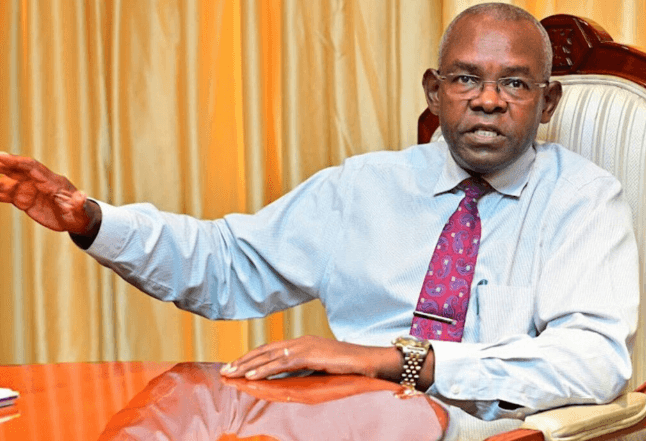
The Central Bank of Kenya (CBK) projects the country’s foreign exchange reserves will rise to a record $16 billion (approximately Sh2.06 trillion) in the coming months, further strengthening Kenya’s financial position amid growing global economic uncertainty. CBK Governor Kamau Thugge said the increase in reserves will provide a strong cushion against external economic shocks, help stabilize the Kenyan shilling, and reinforce investor confidence in the country’s economy. If the target is achieved, Kenya’s reserves will be sufficient to cover about seven months of imports, comfortably exceeding the internationally recommended minimum of four months.
According to the CBK, the anticipated growth in reserves will largely be driven by major foreign currency inflows expected from ongoing investment transactions.
Among the key contributors are:
- Proceeds from the government’s sale of its 15% stake in Safaricom to Vodacom.
- Nedbank’s investment in NCBA Group.
- Continued financial support from development partners.
These inflows are expected to further strengthen Kenya’s external financial position.
Recent CBK data shows Kenya’s foreign exchange reserves have already climbed to $14.1 billion (about Sh1.82 trillion), representing roughly six months of import cover. The increase follows a significant boost from a $750 million World Bank financing package, which was approved to support Kenya’s fiscal reforms, debt management, and broader economic resilience. The government also expects to receive more than Sh200 billion from the Safaricom stake sale, with the funds set to be deposited into the National Infrastructure Fund held at the Central Bank.
Kenya’s stronger reserve position has played a major role in maintaining stability in the foreign exchange market. The Kenyan shilling has remained relatively steady against the US dollar over the past two years, helping to ease inflationary pressures and lower the cost of servicing the country’s external debt. Healthy reserves also enable the Central Bank to intervene in the foreign exchange market whenever demand for foreign currency rises sharply, preventing excessive fluctuations in the value of the shilling.
A robust reserve position sends a positive signal to international investors and lenders by demonstrating Kenya’s ability to meet its external financial obligations.
This confidence is expected to:
- Encourage foreign direct investment.
- Improve access to international financing.
- Reduce government borrowing costs.
- Support private sector expansion.
The CBK believes continued capital inflows will sustain this positive momentum.
Despite the encouraging outlook, Kenya continues to face risks from the global economy. Renewed geopolitical tensions in the Middle East have increased concerns over disruptions along the Strait of Hormuz, one of the world’s busiest oil shipping routes. Higher global oil prices have pushed up fuel import costs, transportation expenses, electricity tariffs, and overall inflation, creating additional pressure on households and businesses. The World Bank has also warned that prolonged instability could slow consumer spending, weaken private investment, and affect remittance inflows from the Gulf region.
Even with external risks, Kenya continues to attract substantial foreign investment. According to the latest UN Trade and Development report, the country attracted $3.2 billion (about Sh413 billion) in foreign direct investment in 2025, an increase from $2.3 billion recorded the previous year.
Most investments have flowed into:
- Digital infrastructure
- Renewable energy
- Manufacturing
- Financial services
The CBK expects sustained foreign investment, multilateral financing, and other capital inflows to keep Kenya’s foreign exchange reserves comfortably above the six-month import cover threshold.
The projected rise in Kenya’s foreign exchange reserves reflects growing confidence in the country’s economic management and its ability to withstand global financial shocks. With stronger reserves, a stable currency, and increasing foreign investment, Kenya is better positioned to navigate external uncertainties while supporting long-term economic growth.

That’s fantastic news for Kenya! It’s good to see the CBK taking such a proactive approach to economic stability.