







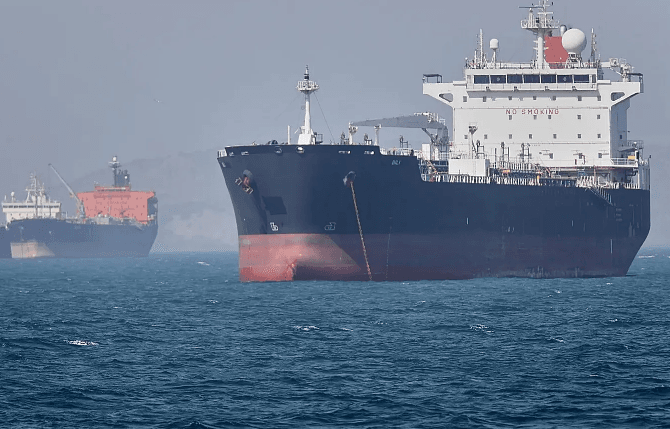
Four Iranian-flagged oil tankers have successfully passed through the Strait of Hormuz, marking the first such movement since mid-April when tensions escalated and the United States imposed a blockade on Iranian ports. According to maritime tracking firm Kpler, the vessels—identified as Hilda I, Amber, Silvia 1, and Happiness I—made the crossing on Monday while carrying a combined cargo of approximately seven million barrels of crude oil.
The ships are reported to have loaded their cargo in mid-April from Kharg Island, Iran’s primary oil export terminal, which handles the vast majority of the country’s crude shipments. Notably, the tankers navigated the strategic waterway with their tracking systems switched off, a tactic often used to avoid detection.
Kpler, which monitors global shipping activity using satellite imagery, indicated that these vessels typically transport Iranian crude to offshore zones near Malaysia and Singapore. There, the oil is transferred to other tankers through ship-to-ship operations before being delivered to final buyers, commonly in China. This method has been widely used by Tehran to sidestep international sanctions.
The latest movement follows a pause in such operations after April 13, when Washington tightened restrictions in response to Iran’s earlier actions in the Strait of Hormuz. While three tankers reportedly defied the blockade shortly after it was imposed, no similar attempts had been recorded until now.
Meanwhile, the US military continues to enforce the blockade. Earlier this week, American forces announced they had disabled an oil tanker by targeting its engine room to stop it from reaching Kharg Island. This marks the sixth vessel to be damaged under the ongoing enforcement measures.
The renewed movement of Iranian oil tankers highlights the continued geopolitical tensions in the region and raises fresh concerns over global oil supply routes and maritime security.
