







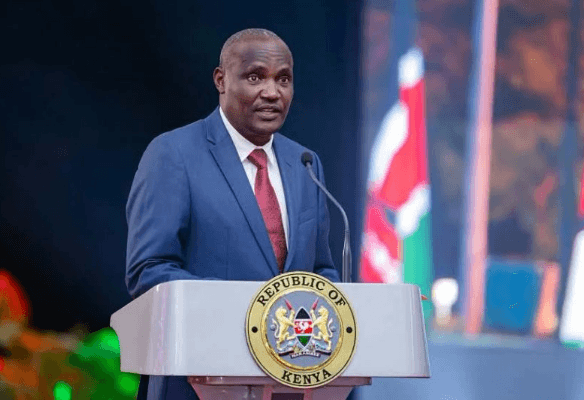
Treasury Cabinet Secretary John Mbadi has appointed six individuals to serve on the Board of the National Infrastructure Fund (NIF) for a three-year term, effective July 8, 2026. The appointments were announced through a gazette notice in accordance with Section 13(1) of the National Infrastructure Fund Act, 2026. The law provides for a board composed of both independent directors and public officers selected based on their expertise and positions.
Among those appointed are Centum Investment Company CEO James Mworia Mwirigi, Fahima Ali Ahmed Zein, Christopher Kibui Maranga, and Latoya Ouna, who will serve as independent directors. Meanwhile, Lawrence Kibet and Mohammed Abdirahman Hassan have been appointed as public officers under the provisions of the Act. Mwirigi brings extensive experience in law and finance, while Fahima and Maranga are recognized professionals in investment banking. Their combined expertise is expected to play a key role in steering the fund’s strategic direction.
The formation of the board follows a rigorous selection process that saw 78 applicants shortlisted to 16 finalists, who were interviewed on June 29 and 30, 2026. The National Infrastructure Fund is a flagship initiative under President William Ruto’s administration, designed to drive long-term development by aligning financial resources with national priorities. The government aims to mobilize up to Ksh 5 trillion over the next decade through the fund to finance major infrastructure projects. CS Mbadi has previously indicated that the fund will help reduce Kenya’s reliance on external borrowing by providing alternative financing mechanisms, including privatization.
The National Infrastructure Fund Act, signed into law by President Ruto on March 9, 2026, lays the groundwork for this ambitious plan. Key projects expected to benefit include the expansion of Jomo Kenyatta International Airport (JKIA), extension of the Standard Gauge Railway (SGR) to Malaba, construction of approximately 2,500 kilometres of dual carriageways, and the development of 10,000 megawatts of clean energy. Additionally, the law broadens the scope of the Railway Development Levy (RDL) to support the expansion of Kenya’s rail network under the new funding framework. As the government pushes forward with its infrastructure agenda, the newly appointed board will be instrumental in ensuring the successful implementation and management of the fund.
