





The United States House Committee on Foreign Affairs has raised concerns over the Trump administration’s approach to managing American Ebola patients, criticizing the decision to rely on a foreign country instead of utilizing domestic healthcare facilities. In a statement shared on X, the committee stressed that the U.S. government has a responsibility to care for its citizens within its own borders. Lawmakers pointed out that America already has specialised treatment centres equipped to safely handle Ebola cases and should prioritise bringing affected citizens back home.
The lawmakers also questioned what they described as inconsistencies in policy, highlighting that the same administration had previously reduced health-related funding to Kenya while now expecting the country to host American patients exposed to the virus. They further urged both governments to take into account the concerns being raised by Kenyan civil society regarding the proposed arrangement.
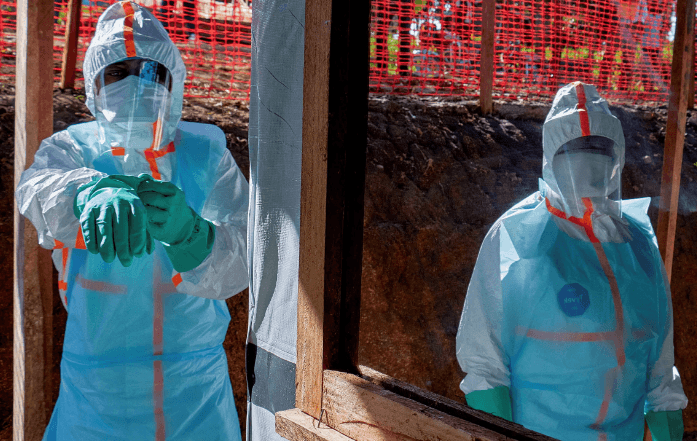
The remarks come shortly after Kenya’s High Court halted plans to set up a temporary Ebola quarantine and treatment centre at the Laikipia Air Base in Nanyuki. The facility, which was to be constructed by the U.S. military, was intended to isolate and treat Americans exposed to or infected with Ebola amid a growing outbreak in the Democratic Republic of Congo (DRC).
The proposed field hospital was expected to accommodate up to 50 patients. However, the court issued conservatory orders suspending the project, citing concerns about potential risks to life. The ruling was delivered on the same day U.S. officials had indicated that the facility would soon become operational. Despite the court’s directive, reports indicated that some American nationals had already arrived at the Laikipia base ahead of the planned rollout of the facility.
The issue has sparked protests in Nanyuki, where residents and youth groups have taken to the streets to oppose the establishment of the quarantine centre. Demonstrators expressed fears about possible health risks and called on the government to relocate the facility to a different location. Protesters marched through key streets carrying placards and chanting slogans, insisting that Laikipia is not an appropriate site for such a high-risk medical operation.
The controversy continues to fuel debate over public health preparedness, government accountability, and international cooperation, as both Kenyan authorities and U.S. officials face mounting pressure to address safety concerns and uphold transparency in their decisions.
