






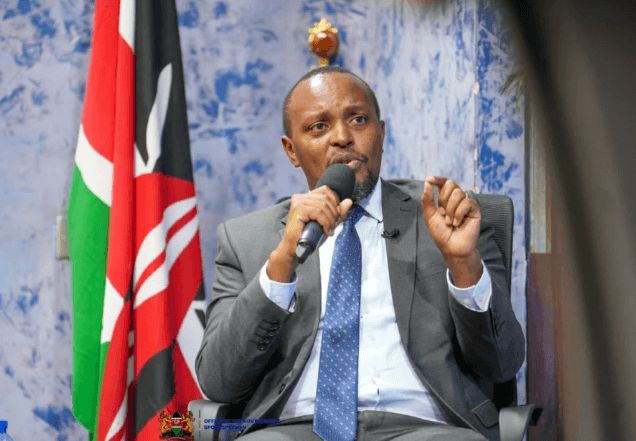
Kenya has enough fuel reserves to sustain the country for at least a month despite ongoing global supply challenges, according to the Energy and Petroleum Regulatory Authority. Speaking during an interview on Citizen TV, EPRA Director of Petroleum and Gas Edward Kinyua reassured Kenyans that there is no immediate risk of fuel shortages.
Kinyua revealed that the country currently holds sufficient stocks of key petroleum products, including diesel and super petrol.
- Diesel reserves can last approximately 23 days
- Super petrol stocks are estimated to last about 28 days
He added that this amounts to roughly 225 million litres of fuel already in storage. Additionally, several fuel tankers are stationed off the Coast near the Port of Mombasa awaiting clearance to discharge their cargo.
G2G Deal Cushioning Kenya
The EPRA official attributed the steady supply to Kenya’s government-to-government (G2G) fuel import arrangement with international oil suppliers. Under this system, contracted suppliers are obligated to ensure consistent fuel delivery, even amid global disruptions. Kinyua explained that suppliers are now sourcing fuel from alternative markets such as India, moving away from traditional European supply routes.
Despite a stable supply, Kinyua acknowledged that global logistics challenges are driving up costs. He explained that suppliers are increasingly using smaller vessels through the Red Sea route, which is less cost-effective compared to larger shipments.
Kinyua also defended the recent fuel price review, which saw pump prices drop by Ksh.10 per litre. He noted that the reduction came despite a sharp increase in global fuel prices:
- Petrol prices rose from $686 to $1,060 per tonne
- Diesel prices surged from $637 to $1,300 per tonne
Diesel and kerosene, he said, have been the most affected by the global price spike.
The assurances come amid growing concerns among Kenyans over a possible fuel shortage, which has contributed to recent price fluctuations. Kinyua, however, maintained that the situation is under control and that the current challenges are part of a broader global crisis affecting multiple countries.
